Sunday, February 14, 2016

Cloth Diapers & Child Care

cloth diapers and child care daycare

I hope you enjoyed Jessica's guest post on Cloth Diaper Ins and Outs. This is a follow up from a child care provider's perspective.

TIPS & TRICKS

In general, cloth diapers are pretty much the same as disposables. Same general routine and diapering procedures. There are a few things I keep in mind, however.

I have to store the diapers and liners. Yes you have to store disposables as well, but those stack up neatly or are in plastic sleeves. For cloth, I use an IKEA plastic bin that stores the diapers and a roll of liners. I take the diapers out each morning and place them into the bin and hang the wet bag on the bathroom door.

cloth diapers and child care daycare


I can't wipe with a cloth diaper the same as with a disposable. Most poop can be wiped off with a disposable, but if you do that with a cloth diaper, you get more poop on it than necessary, which you don't want. I keep a roll of toilet paper handy and will use that to remove the majority of the mess prior to using wipes. Otherwise, you will use a dozen plus wipes. I just plop the toilet paper into the toilet, since I change them on a pad on the floor of the bathroom. [State likes for the bathroom stuff to all be in the bathroom, and a pad on the floor saves my back from lifting 2 year olds.]

I need to think more about changing order. I change all of them at the same time, usually. If using gloves, it doesn't really matter, but I don't. I use a plastic bag for the nasties. I turn it inside out to grab the soiled liner off the cloth diaper, so I need to do the cloth diaper child first. Then I do the others and put the soiled disposables into the same bag.

I need to prepare the diaper before taking the other one off. This is basically true of disposables as well. However, pulling a liner off the roll requires two hands. laying out the diaper requires two hands, getting the snaps together takes two hands. If you have squirmy child, things can get messy fast. I always lay out the diaper with liner on top prior to laying the child down on the pad. I can put a disposable on one handed while holding a child in place, not so with a cloth diaper.

I need to be considerate of the parents and place very poopy diapers into a plastic bag. This lets them know that it will need additional attention and not just be tossed into the laundry. The plastic bag goes into the wet bag.

I need to keep in mind that it is against state regulations for me to do any more with a soiled diaper than is absolutely necessary. I can't pull out absorbency inserts, wash out poop, or do anything that could increase contamination of the space.

The parents have to bring the diapers daily. We start out the week with 5. Usually I use 3-4 a day at this point, 20 months old, depending on how late nap goes. They take the soiled ones each evening and bring me a corresponding amount back the next morning in a clean wet bag. I keep one spare in his clothes cubby and have a few disposables as back up.

The parents have to supply diaper rash cream. Most creams will lower the absorbency of the cloth diapers, so they are required to provide one appropriate for the diapers.

MY FAVORITES & NOT SO FAVORITES

Wet Bags: My favorites are the Kanga Care wet bags. They are about three times as roomy as the envelope style. It is SOOOO much easier to get soiled diapers into it. It can hold a days worth easy, along with any soiled clothing. The envelope styles barely hold a days worth of soiled diapers, and it can get messy trying to stuff them into the smaller opening. I would love to have a Kanga Care one for every child, especially when we have wet swimsuits in the summer. 


There's just really no comparison. I'm always happier to see the Kanga Care bags.

Diapers: My favorite, especially for boys, is Bum Genius. Each diaper brand has a different liner/insert configuration. Some have one long liner that is doubled over, some have snap in liners, some have a single pocket liner, etc. Bum Genius have full reach dual pockets, one on each side. What I like about this is that with inserts, you can double the absorbency as they grow older. For boys, I can double up the front liner at nap, when they are usually sleeping on their stomachs over 18 months, and are more likely to pee out because of it, giving me 3 layers of absorbency even without inserts.


why I love Bum Genius diapers


I DO NOT LIKE AT ALL the GroVia brand. They are so much narrower than the other brands and they snap front to back rather than back to front like disposables. The liners are much more narrow, and they have the single doubled over liner, Since I've been using disposables for over 30 years, the backwards snapping alone drives me nuts. It's just...WRONG and irritates me that I have to think while changing a child's diaper, which is one of the most mindless tasks, and a time when I should be spending engaging with the child rather than being forced to THINK about what I'm doing. GroVia is on the right.


I am also not a fan of a coop/no-name brand that has a dark gray inside. They are the only ones I have had two pee-outs from. I no longer use them at nap time. Ever. 

Some more personal opinions: Happy Heiny has only a single liner, but is super absorbent. Smart Bottoms don't seem to hold enough pee for bigger kids. Blueberry Diapers are fine. 

Jessica has mentioned that the ones with the Velcro rather than snaps are easier for the little ones to get open, but that Velcro is pretty darn strong, and I don't mind it at all. I can see where it would be a problem if the diapers were washed with other linty clothing, but I don't mind them. Quick and easy rather than trying to align snaps. They are not as adjustable, so I would imagine the cost would be higher since they would only fit a more limited size range.  

Frankly, the only irritation with cloth diapers has been the GroVia brand of diapers. Otherwise, I have had no issues with using the cloth diapers whatsoever. 

I was very surprised that indeed, he has less diaper rash issues than the ones in disposables. These new "cloth" diapers have great absorbency and the PLO outer fabric holds everything in wonderfully. 

I would HIGHLY recommend them to parents. Providers, cloth diapers are really a non-issue. Cloth friendly is a great marketing tool that costs you nothing. Being cloth friendly is easy peasy. 

They can be expensive to start out with, but you can always make your own! Additional cloth diaper pins on my Baby Crafts Pinterest pinboard.


Follow Little Stars Learning's board Baby Crafts on Pinterest.

Friday, February 12, 2016

Cloth Diaper Ins and Outs

basics of cloth diapers

While I knew they had changed, when I first saw one of the new ones, my reaction was, "Well isn't this slick!" While they are called "cloth diapers," they have SO much more to them than the old fashioned white ones.


My client, Jessica Nollett, has kindly created the following guest blog post to discuss the ins and outs of cloth diapering.

I have added my 2 cents into a follow-up post from a provider's perspective Cloth Diapers & Child Care. [I have my favorites, too! Along with some tips.]

YES, WE CLOTH DIAPER

That look when you tell someone you cloth diaper your child. It’s often one of horror/disbelief, that is quickly covered up by the fakest smile you can imagine, and then followed by comments like “the poop is too much for me,” “just wait till he is older; your tune will change,” or an ominous “Hmmmm.”

Those interactions humor us at this point. My husband and I made the decision together to cloth diaper our children long before our son was born. It wasn’t just because of the environment or the cost savings, but was almost a ‘why wouldn’t we cloth our kids’ thought. From all of our research, we found out we would be saving money if we cloth diapered more than one child (it’s a breakeven on one), and we do care about the environment, but there were other things that we liked: 

  • cloth diaper kids are easier to potty train
  • they tend to potty train sooner
  • diaper rash isn’t as bad with cloth diapers, 
  • and frankly, tell me that a disposable is cuter than this!

If you haven’t seen a cloth diaper like this, let me quickly get you up to speed. Cloth diapers these days are innovative, adorable, and nothing like what they once were. They used to be what you used if you couldn’t afford disposable. Now, they are much more expensive upfront, but you can save over time. The stigma has changed from poor people cloth to rich hippies cloth. 

They are constructed of a PUL (polyurethane laminate) coated fabric shell with snaps or Velcro (hook and loop) that are adjustable in rise (up/down) and waist. On the inside, there is either bamboo, cotton, hemp, or a microfiber system of pads and fabric to absorb everything. On the back of the diaper and leg holes, there are elastic gussets to keep everything inside the diaper. 

THE INs and OUTs

OUR STASH

1) Diapers:

The diapers that work best for our situation are the All-In-Ones (AIO). This means that the absorbent pad is ATTACHED to the rest of the diaper. We do have a decent collection of Pocket Diapers (there is a pocket that you stash the pad into), but it’s a hassle for daycare. At home, we pull that pad out of the pocket after use, but daycares can’t legally do that, so you are left digging through your wet bag, touching wet and dirty diapers. Gross. (Warning: AIO diapers are more expensive, but worth it for us). Some of my favorite brands are Bum Genius, Smart Bottoms, GroVia, Thirsties, and Blueberry


cloth diapers

When diaper shopping, I prefer diapers that are also one size fits most; they are bulky on your baby at first, but become more trim fitting as your child gets older. If money is a factor, I strongly suggest looking at the big picture, and realize if your child wears a diaper 2x per week for 100 weeks, $20 for that diaper is no big deal, BUT there are online coops where you can buy off-brand diapers for less. We have found they aren’t as great as my favorite brands, but they get the job done.

2) Pail:

We use a Dekor diaper pail, and it does a good job. A fancier option is the Ubbi. Both brands offer wet bags if you choose to cloth diaper. Be sure to get two wet bags for the pail, that way one can be in the wash. We also have a regular trash can with a lid/peddle for the wipes.

3) Wet bags:

These are the bags that are lined with a polyurethane laminate (that is also used on the diapers) and are where the diapers are placed after use. We have about 5 of these, and send them daily to daycare full of clean diapers, and the dirty diapers are sent home in the same bag at the end of the day. Wet bags are also great for swimsuits.

4) Liners:

When babies are exclusively breastfed, diapers can be tossed into the washer, poop and all. Once food is introduced, majority of the poop needs to be removed from the diaper before washing. There are lots of ways to do this, but we use flushable liners. They catch the poop, and can be tossed in the toilet with the poop.

5) Rash Creams/Sprays:

Regular rash creams will RUIN the absorbency of your cloth diapers, but there are great alternatives that can be used. Grandma El’s offers a great one for a bad diaper rash, but my favorite is CJ’s Butter (I use the spritz). I like it the best, because it is not just for diaper rash, but can be used for dry skin, bug bites, sun burns, etc.

OUR ROUTINE

Our son (17 months) wears cloth diapers during the day every day (home and daycare), but wears a disposable at night, if we are out and about, and when we are out of town. And honestly, we could do cloth for the last two, but we are lazy. We have a “stash” of 30 diapers, only really use 16-18 of them (because we definitely have favorites), and do a diaper load of laundry 2x per week. As he has gotten older, we use less diapers per day, but definitely need more absorbency than before. When he was younger, we were doing laundry every other day, and then 3x per week after that.

The hardest part about cloth diapering is the laundry. It’s not that it’s difficult, it just takes time, and lots of rinse cycles. While there are special cloth diaper detergents, most people prefer regular powder Tide, and less is more. Too much detergent can affect the absorbency. How you do it: pre-rinse your diapers, wash with detergent, rinse again, and then dry. To speed up drying, invest in wool dryer balls. They are amazing for all of your laundry.

TIPS ON GETTING INTO CLOTH

1) Take a class. We found that our local cloth diaper store (Itsy Bitsy Bums) offered a class on cloth diapering and explained all of the ins and outs of it, for free!

2) Register for diapers. This was great! We got some adorable prints and our friends had fun picking them out.

3) Look for a newborn rental program. Newborn diapers are smaller and are outgrown quickly, so they are not worth the investment. Itsy Bitsy Bums offers a great rental program for the first 12 weeks, for $200, and if you return them for $160 store credit, you can buy lots of cute diapers. You also have the option to return for cash/credit and get $100 back.

4) Build slowly and based on your needs. Your preferences may change and the speed at which your baby goes through diapers will change, so no need to get them all right away.


Thursday, December 3, 2015

Why We Pillow Fight


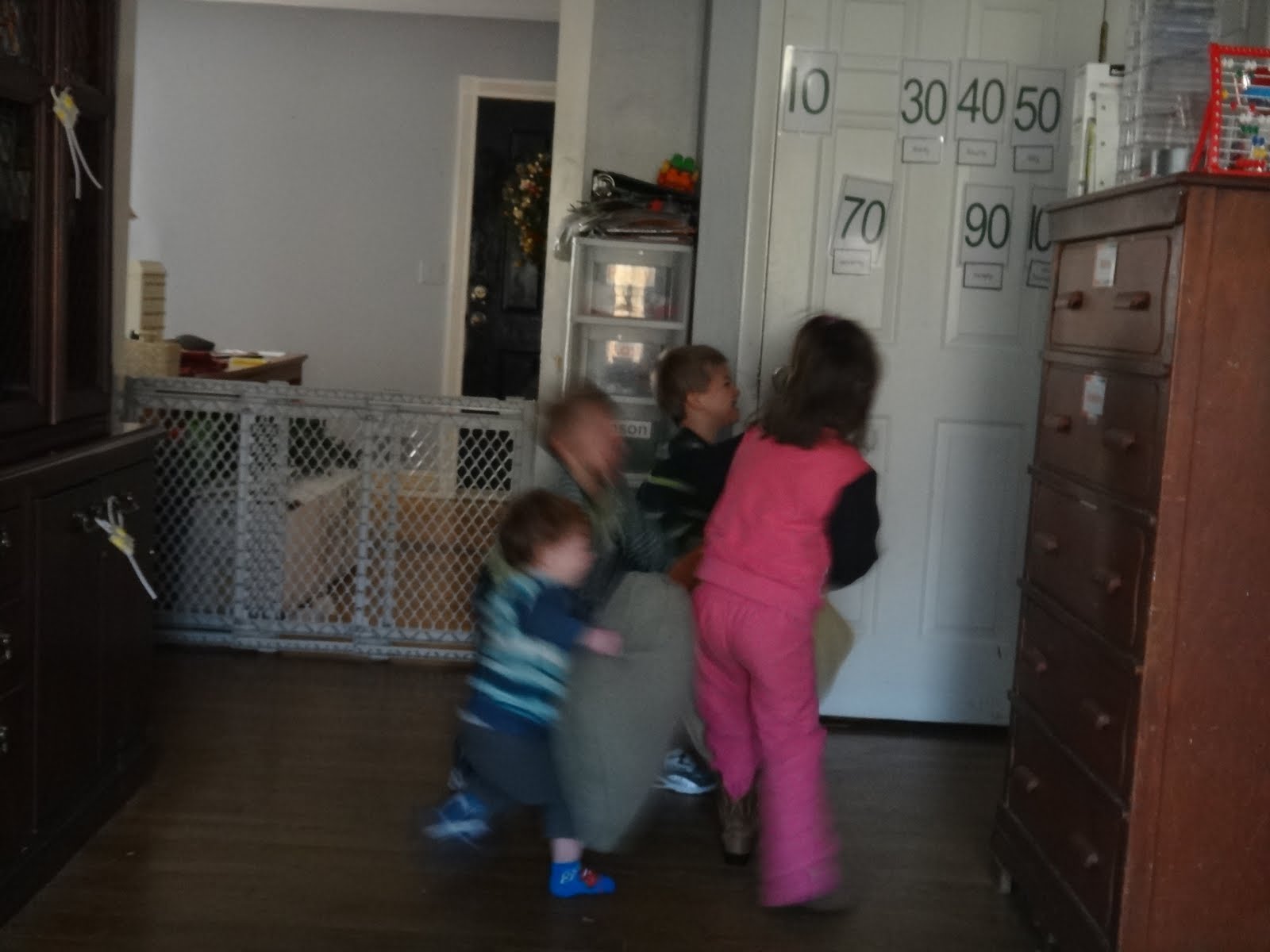
While we are a play and movement-based school, and spend as much time in physical activity and outside play as possible, there is an element of physical interaction that MUST come into play, for children to fully develop their proprioception sense. 

This is an excellent article, that I strongly recommend for all parents, care givers and teachers. Here is an excerpt: 
"Due to the busy schedules of today, children often don’t have hours to explore the outdoors, to help with the outside chores, or even do small jobs that require manual labor. Therefore, many children don’t have the same opportunities to fully develop and fine-tune the senses in the joints and muscles. As a result, more and more children are starting to have trouble regulating how much force to use when pushing and pulling and even interacting with the objects and people around them.
 This is why we are seeing children hit with too much force during a game of tag. Their senses are not quite working right – all because they are not engaged in an adequate amount of active play and movement on a regular basis." Valerie Strauss, The Washington Post 
We work on spatial skills, orientation skills, gross motor skills, etc. But there are few activities better than a pillow fight to get children really understanding the concept of physical force, in a safe manner. Pool noodle fights are another, but those are less interactive. They are, of course, well supervised, though I try not to interfere unless absolutely necessary. 

Note that these children are well versed in democratic decision making among themselves, and that our environment is based upon respect and caring for one another. Here, it could never be a melee.

What happens:
  • They learn how to hit. It is not easy for a preschooler to manipulate a pillow for accuracy and force at the same time.

  • They learn balance. Excellent balance. Building core strength. 
  • They learn how to duck and cover and to GET HIT. Super important.
  • They learn how to fall during interactions. Sometimes they all go down in a tangle. 

  • They learn how to get back up, disentangling without hurting one another or themselves. 
  • They learn that rules are necessary and how to create them. "STOP! Hey, I have a ponytail in and it hurts when you hit me on it. Don't do that. Okay?" "Okay!"

  • They get INSTANT feedback. "HEY! Not so hard!" "You nearly made me go into the cabinet. Be more careful!" 
  • They learn to counter force with a similar level of force. This is an amazing study. It is rare for a child to meet another child's force with significantly greater force. It usually escalates at a very prescribed pace.
  • They learn to be very aware of multiple environmental issues...little ones, walls, corners, door knobs, etc. and to react accordingly, regulating their force and direction.


"This is even more proof that delaying physical contact in sports is very risky. So many football leagues, hockey leagues and the like have jumped on the band wagon of delaying body contact. I am talking about tackling and body checking, and other legal and essential parts of the sports, until kids are older.
 The idea behind it is to wait until they have a better handle on their bodies and the sport before engaging in the physical contact aspects. Thus preventing injury at younger and older ages. It is having the reverse outcome. The players have not had the gradual introduction to the body contact over the years, and now when they are bigger, faster, and stronger they are thrust into it. They don’t know how to hit, they don’t know how to avoid, anticipate a hit and they don’t know how to fall. They also have anger issues, as they are now being hit, and hurt and don’t know how to mentally and emotionally handle it. When I say hurt, I don’t mean injured, but just the obvious pain of being taken down.
Like any other form of over protection, it is short term and only serves to make the parents feel better. The parents feel better because at that exact moment they prevented their snowflake from adversity, and yes potential injury. What they never see, is that they are actually creating a problem. Being that their snowflake is now ill equipped to handle the sports natural progression. Just like in life." - Comment by Warren

That's why we TEACH it here. 

Friday, September 25, 2015

Toddler 101

Toddler 101 is the expectations of performance and compliance to specific commands for behavior necessary towards the safety of the child and the smooth conduct of transitions. 


teaching toddlers for safety how and why

I will go over what those expectations are, how I teach them, why I teach them for child care situations, and why they are important for parents. 

Toddler 101 is one of the main reasons why we are complemented EVERY SINGLE TIME we go on outtings about how well behaved are Little Stars Learning students.

I started writing this post years ago, and frankly, my methods and expectations haven't changed. I have a newly enrolled 1 year old Mr. R, and Mr. L who is also 1 has been with me now for a few months. I'm once again convinced of the importance of Toddler 101.

I had a client who liked to play chase with her toddler. She would chase after him laughingly saying, "Stop! Come back here! I'm going to get you!" The child would laughingly run away from his mom.

See any issue with this?

Of course when he was two, he ran past her out the door and directly towards my busy street at rush hour. She's screaming at him to stop, come back. He laughed and ran on. I stepped out and said, "[Thomas!] Stop! Sit!" He did. On the sidewalk. Inches from the rushing traffic.

We were at my oldest son's graduation. My youngest was twenty months. As we chatted with family, each thinking that he was being watched, he wandered off and climbed 3/4 of a two story straight stair case in the lobby. As his dad ran up the stairs I said loudly, "Jacob! STOP! Stay!" He did. Going no higher, waiting for his dad.

It is that important. Life and death important. Toddlers' abilities far outweigh their mental capabilities or ability to self-impose limitations on impulses.

I was explaining to Mr. R's mom Toddler 101, and she said, "So, it's like with a dog?" Yep. The American Psychological Association equates the intelligence and understanding of a dog as being equivalent to that of a 2 year old human child. So for a 1-2 year old toddler, expectations of behavior and verbal understanding are the same. If you would expect your dog to understand it, then you can expect your toddler to understand it. If you would expect your dog to do it, then you can expect your toddler to do it.

It is not demeaning to have appropriate expectations for understanding and performance based upon a person's development, no matter what their age. As you would speak differently with an older person with dementia or a person with reduced mental faculties, so you should speak appropriately to toddlers WHEN YOU EXPECT COMPLETE UNDERSTANDING.

I do not speak to a 2 1/2 year old or older child in this manner. I do not speak to toddlers in one-word commands at any other time. Only when understanding and compliance of action is expected.

So what is Toddler 101?

It is a toolbox of commands that are easily taught, understood, performed and necessary. The are not over-used. They are stated in a firm, commanding voice that is easily recognized as expecting compliance.

How are they taught? Expectation, repetition, modeling, physical guidance.

When do I teach this? EVERY SINGLE TIME!! that it isn't done correctly. There are no exceptions. There can't be. If they get away with defiance even one time, then it will get exponentially more difficult to gain compliance at any level, especially instant compliance.

At 2 1/2 and above, most children gain a level of logic/reasoning capability that makes instant compliance unnecessary. You can say, "You can stand in that chair, but not that one. This one is sturdy, but that one will tip over." Toddlers DO NOT have that level of understanding. For them, everything must be strictly black and white. Do/don't do. 

I'll go through the commands one at a time. At school, I always start with their name, so that the child I am addressing is very aware of who I am directing the command towards.


DOWN
School: Toddlers love to climb. Often they want to climb on inappropriate things. Mr. L, today, managed to get half way up the big slide for the first time. I always expect them to do the unexpected, so while I was several feet away, I saw him and said, "DOWN!" He walked himself back down the slide, walked over to the smaller slide, looked at me, and I smiled and nodded. He played happily on the smaller slide. I also use this one at nap time to tell them to lie down.

Home: Mr. L has also been climbing onto the dining table at home. He knows he's not supposed to, but impulse control at 1yo is pretty much non-existent. He knows he shouldn't, but NOT doing it is nearly impossible. So, mom can say, "DOWN!" from across the room and stop the action in its tracks, rather than having to go to him, and coach him down. [Always coach them down safely rather than remove them, so they can do so when they sneak behind your back. Which they will.]


SIT
School: Sit in a chair rather than standing or kneeling. Sit down while I'm dealing with someone/something else. Sit down to eat, rather than wandering with hands full of spaghetti.

Home: Pretty much the same. Sit down in a restaurant, Sit down at church.


NO
School: Whatever you are doing, stop doing it and don't even think about doing it again. As with all of these commands, it is not over used. For instance, if I see a mouth going towards another child's body, it doesn't matter if their intention is to bite or not, it's a firm, "NO!" and they move away. If the child is reaching onto the counter for anything, it's a firm, "NO!" Mr. L started reaching into the toilet while I changed Mr. R today. It got a firm, "NO! Sit!"

Home: Too often home environments are not child-friendly. There are TOO many NOs. At home I always request that NO be used for absolutes: electronics, death-trap issues, etc. Pick your battles and as always, if a child needs to be told NO repeatedly for the same issue, then most likely the environment needs to be changed until they have better impulse control, around 2 1/2 years old.

STOP
School: It means freeze in place. We had a massive spider web next to the shed. I saw Miss L going towards it and yelled, "STOP." She did. I then told her what was there and she went around it. This is rarely used, but when it is, it is usually important and I say it to the group, not an individual, because it is something I need complete concentration upon or I need everyone to be aware of it, so I freeze the whole group.

Home: Parking lots, stores, restaurants, basically any public place that a child may run off or wander out of your comfortable physical distance or potentially into a dangerous situation.

HANDS UP
School: Most of the boys like to touch themselves during diaper changes. This can get really gross during a really nasty poopy one. HANDS UP means that they keep their hands higher than their neck during diaper changes. I also use it after finger painting as we walk to the sink, and after lunch when they have spaghetti or chili hands.

Home: May not be used as often at home, but imagine if they picked up something gross off the ground, etc. and you don't want them getting it on themselves, furniture, or in their mouths. Yeah. It's nice to have in the arsenal.

UP
School: At the end of nap, I say UP to get them to stand up in their pack-n-plays so I can get them out. I change them on a pad on the floor of the bathroom. When done, I say UP. It's convenience for me more than anything.

Home: Same. Have them stand up in their crib, etc. Toddlers can get very heavy. The easier they can make it on your back, the better.


GO
School: Leave the bathroom, leave the room, leave the kitchen area, go to another area of the room. They learn GO pretty quick. Following the finger I point in the direction they are TO GO, takes a lot longer.

Home: Ever take a hot pan out of the oven and find your toddler behind you? Yeah. Happens more often that you might think. GO is the answer. Find peering eyes as you try to go to the bathroom? GO!

QUIET/SHHHH
School: Trying to hear a phone call, older children trying to hear a video or music, children sleeping and someone is making stupid noises, reading a story and someone is talking/playing loudly. Child throwing a fit for no good reason. [Good reasons don't get shushed. Children are entitled to their valid emotions vs. drama for drama's sake.]

Home: Church, restaurant, phone call, etc.


I just threw in this pic because it's cute.
STAY
School: This is the hardest one to teach. The lack of impulse control is REALLY hard for toddlers. This one comes into play most often here during the winter months when I am trying to get everyone into winter wear and the toddlers want to strip as quickly as I can get it on them. Knowing, someone has to go potty at the last minute, or mittens can't be found, etc. and I just need them to SIT and STAY for 5 minutes. Pleeeeease. I used it the other day when the bigs were picking up and the toddlers were dumping bins faster than 4 preschoolers could pick up and the frustration level was getting out of control. I worked on the toddlers doing SIT and STAY while the bigs finished.

Home: Bringing groceries in and need your child to just sit for a few minutes while you go back and forth. Anytime you need them just STAY for a few minutes while you do something. Not often, but comes in handy when it is needed.

COME
School: I'm old and out of shape. There is NO WAY I'm going to chase down everyone over a 1/2 acre when I want them to come in or come to me. All mobile children are expected to come to me when I say COME. I also say, "Come change," when I want the diapered ones to come to the bathroom. I tore my rotator cuff carrying around large children. I don't do that anymore. If they are mobile, they can get there on their own.

Home: Just getting a child to move can sometimes be a challenge. They get side-tracked easily. Conditioning them to come at a simple command can be a huge frustration remover.


CLAP CALL TO ATTENTION
School: We have a large school yard. We have a lot of trees and street noise. My voice gets easily lost within the mix of theirs, their play, and everything else. When I clap, everyone stops and looks to me for direction. It's kind of like STOP without the urgency or importance, with the specific expectation that they all look to me. When I want them to all come in, I do a specific clap cadence. It saves my voice.

Home: This would probably work best with older children at home, when out of easy hearing and you want to give them some direction or call them back.

UH-UH
School: The most common sound I utter. It is a simple reminder that they are making un-wise choices and need to change their direction of behavior. Uh-uh will morph into a NO and then a VERY firm NO! before physical intervention of removal from the situation.

Home: I believe in giving children the opportunity to make wise choices, of giving subtle reminders when they are heading in the wrong direction so that they have the opportunity to change their course. Too often children are allowed to head in the wrong direction, then slammed with parental frustration when they cross some invisible line. That just isn't fair. Give children a heads-up when they are headed in the wrong direction. Toddlers have been on this earth for 1-2 years. Keep your expectations reasonable.


Consistency in expectations and limitations is necessary for children to trust their world and to make good choices. They are fully capable of doing so from a very early age. All it takes is teaching them the boundaries and expectations how to meet them.

The benefits of teaching Toddler 101 are mainly for safety reasons. Instant compliance to simple commands is crucial in an emergency situation, and toddlers are more likely to get into an emergency situation than any other age. 

Another benefit is that a toddler feels control in that they can understand and perform to meet expectations, receiving praise and confirmation. Without Toddler 101, this may happen much later in a child's life. Additionally, they learn how to LEARN. Toddler 101 is TAUGHT, through repetition and showing the child what to do to be successful and meet expectations. That is pretty powerful for a 1 year old. 

Sit, stay, come, go may seem like dog commands, but they are developmentally appropriate. Many parents want to baby their 1 year olds, but they are fully capable of meeting simple expectations and verbal direction. Don't minimize their capabilities. If taught Toddler 101, then they have some level of responsibility for their own actions and well-being.

Mr. R's dad hung out with us for a while this afternoon, and he was AMAZED that Mr. R responded so well to my commands, and said that they would DEFINITELY be working on those at home. I got back into this post for them.

You'll also find out a LOT about your toddler's personality when teaching Toddler 101 commands. I've taught more than a dozen toddlers. Each one is different. But they ALL learned the commands and responded accordingly. To me. To their parents, well, it's been a mixed bag of results. Consistency and an ingrained expectation of compliance are key. Good luck!

After Toddler 101 commands are mastered, we move on to Toddler 102. Toddler 102 is simple single directions: bring, pick up, put in, give, put back, not yours give back, nice touch...
Tags: daycare, child care, homeschooling, toddler, infant, teaching, baby, teaching, instruction, curriculum, expectations, parenting, parents, lessons, discipline, behavior, 

Friday, July 31, 2015

Graduation The Places You Will Go


Miss A.'s momma put on the most AMAZING graduation party for us. I can't thank her enough. Nor, the other parents and family members who have given of their time and resources so generously to this school over the last 5 years. Miss A.'s daddy, used his production company resources to create a tear-jerking video covering their time here. It was just...WOW! What a wonderful keepsake for the children and me.


The children went through the graduation ceremony to receive their diplomas, received the book Oh the Place You'll Go with a way-too-long note from me, and autograph puppies they enjoyed passing around for signatures. After eating pizza and tasty treats, they put on a showing of their Reader's Theater production of A Princess and the Pea, which they had been studiously practicing.


So sad to say goodbye to these WONDERFUL children. Miss H joined me at 9 months, and Miss A and Mr. G both at 4 months. I never know how the mix of new children will evolve. In this case, fate, destiny, a higher power or just darn good luck, led these three children to me at the same time. Their accomplishments have been astounding, in a huge part due to how they have played off of one another developmentally and educationally.


Focus and curiosity are the key components of rapid educational grown. I've had VERY smart kids here who had no focus and met the minimum levels of development and education. I've had not-so-smart kids here whose focus has pushed them far ahead of their higher IQ'd friends. These three, had the perfect blend of intelligence, focus and drive.

This program is child-led learning. In the case of these three, it was child-PUSHED. I have worked like a maniac to try to keep up with their educational demands. They went through my preschool curriculum by the time they were three. Since then, all curriculum has been tailor-made to their interests and capabilities and through their direction.

They leave me for kindergarten all reading 3rd grade chapter books, and that's just one tiny aspect of their knowledge and capabilities. Mr. G was offered a double grade skip immediately, which his parents declined. Each set of parents has been in touch with their child's principle, teacher(s), counselor, and/or gifted coordinator of their respective schools. While each school has plans to meet their social/emotional and advanced educational needs, it has been very interesting to see the differences in how they plan to accomplish this. The responsiveness, though, has me hopeful that they will continue to be challenged.


The most important thing that these children leave me with is that they are good people. While they have their quirks and moments, in general, they are kind, thoughtful, helpful, responsible, hard working, polite, and socially aware and responsible. That's what I'm most happy about.
Tags: preschool, graduation, party, theme, Oh the Places You Will Go, Seuss, pre-k

Thursday, June 18, 2015

Box = Learning

I still say that a box is one of the MOST important elements in early childhood learning. Not only does it promote large motor development, it presents so many additional learning opportunities. 

Mr. L is 11 1/2 months old.
This is a few pictures in a single day.


  • Risk Assessment


  • Sometimes he just likes to hang out like this. 

    • Analysis
    • Logic/Reasoning
    • Handling Frustration
    • Thinking Outside of the Box [lol]
    • Perseverance

    It's easier to get in on the low side. 
    He's learning that.


  • Cause/Effect


  • Rocking a little too hard while sitting inside.

    • Dramatic Play
    • Imaginative Resourcing

    Sitting, hiding. Popping up and down.

    • Positional Location
    • Climbing Coordination
    • Volume and Measure
    • Height and Depth Assessment

    Climbing and surfing, sitting and laying on top. 
    He hasn't gotten the nerve to stand on top yet. 
    I'm waiting.
    Notice the dinosaur hidden inside.

    "[L]! Are you ON your box?
    Where's your dino? Is it INSIDE your box?" 

    • Force
    • Offsetting Forces
    • Work
    • Coordination
    • Balance
    • Strength Training

    Carrying it all over.
    Pretty heavy box for such a little guy.
    That doesn't hinder him in ANY way.

    •  Physics

    Putting it off-balance so that he can rock it like a maniac.

    But yes, it's all gross motor. 
    And tiring.


    Tags: box, gross motor, boy, girl, infant, toddler, daycare, child care, learning, education, homeschool, early childhood education, ECE, DAP, Reggio

    Thursday, March 19, 2015

    Easter Sensory Bin with Learning Activities

    Easter sensory bin with learning activities

    Time to change out the sensory bin from March to April. Since we are doing a full-on regarding holidays this year, since the bigs are heading off to kindergarten in the fall, Easter is the theme.

    I wanted to use birdseed as our fill-n-pour, but the girls insisted that we use the red/white/blue rice.

    There are many learning activities available with this sensory bin.

    What's in it?
    1 egg carton
    18 plastic eggs*
    18 colored feathers
    1 set of egg dying baskets*
    1 package of small/medium/large colored pom poms*
    3 bunny plastic eggs*
    1 package pink/green/blue styrofoam glitter eggs*
    8 chick plastic eggs*
    1 package Easter erasers*
    crimped paper shreds
    colored rice
    *From the dollar store

    Additional: tools, baskets, containers


    Easter plastic egg matching

    Easter sensory bin color matching pom poms


    Easter sensory bin chick find the egg


    The Learning Games

    Number Matching 1-18:
    At the bottom of the 18 egg carton, I wrote the numbers in colored Sharpie. The colors give a visual clue of the color of the egg for those children less skilled. For the more advanced, they usually grab an egg then look for a number, often disregarding the color coordination. 


    Color Matching - Eggs:
    For children who don't know their numbers, the egg carton can be used a simple color matching game with the color of the written number to the color of the eggs.


    Color Matching - Feathers:
    18 colored feathers are included in the bin, allowing for the same color matching activity, but with feathers.

    Easter sensory bin feather color matching

    Which Chick Has the Egg?
    One child places a small egg into a chick and puts it back into the "nest." The other child[ren] take turns picking out a chick by number, and looking inside to see if that the one. If not, the chick gets closed and replaced and another turn is taken until the egg is found. Works prediction and number recognition 1-8.


    Color Sorting Bunny Tails:
    Sorting the pom pom "bunny tails" into the egg dying cups. These cups aren't that sturdy, so I've wrapped them in packing tape this year to see if they hold up. If not, I'll be buying small metal buckets for this activity in the future. They count how many are in each cup after sorting. Since they can't usually find all of them, or appropriate them, at every session, the quantities should change every time. 

    Easter sensory bin pom pom color matching and fine motor

    The feathers can be sorted into the cups as well, but there are only 3 feathers of each color on purpose for the egg carton, and there isn't an orange cup in this set. So sorting the feathers in this cup set has limited value.

    Sorting Bunny Tails by Size:
    These bunny plastic eggs came as a set of 3. It works, as the pom poms came in small/medium/large and this is a good observation, logic/reasoning, and fine motor activity. They fill up the bunny bottoms then count how many were in each one as they take them back out. A good volume measurement introduction as well.

    Easter sensory bin size sorting and fine motor

    Bunny Color Sorting:
    These styrofoam eggs only come in the blue/pink/green, so sorting them in the bunnies works. Again, counting how many once done.


    Matching:
    This set of Easter erasers just happens to have two of each style. Perfect for a simple matching game.

    Easter sensory bin eraser matching

    When I introduce the new sensory bin, I let them go at it for a while, then I introduce the learning games that I don't see them incorporating into their play. I simply do them while we play, and they pick up on any they are interested in and developmentally ready to perform.

    They also make baskets, do fill-n-pour and have fun.

    Easter sensory bin making Easter baskets

    You may also be interested in our Spring Sensory Bin.


    Follow Connie -'s board Easter Theme on Pinterest.
    Tags: daycare, child care, preschool, pre-k, sensory, sensory bin, math, early math, science, gross motor, fine motor, homeschooling, kids, child, Easter, holiday, spring, egg, eggs, theme, curriculum, unit