Friday, February 8, 2013

Chinese New Year

If the children get down Spanish vocabulary early, which these around-3-year-olds have been working on, then we work on Mandarin Chinese here. So Chinese New Year is a holiday we really get behind.


In my 3-year rotating curriculum, we spend a week on Chinese New Year every 3rd year. This year was it.

Our daily topics:
Monday - Where is China?
Tuesday - Symbols of China
Wednesday - Life in China
Thursday - Animals of China
Friday - What comes from China?

Books we used:


Crafts - This is a craft intensive unit.  
A lot of what we talk about during the week relates to Good Luck. This is a pre-writing worksheet I created. You can download it for FREE by clicking on the image.
  

Since 2013 is the year of the snake, I created the pattern below, again FREE for download by clicking the image. 


We cut out letter S snakes and decorated them with google eyes and a red forked tongue. Since we hadn't used markers in awhile, that was what used to decorate the snakes. After coloring them, we cut out and glued on our letter s sight words: see, she, said, some, soon, say, saw, stop.


We played around with some things that came from China - dominoes, a compass, kites and our tanagrams.


The Chinese lanterns worked fine motor cutting skills. These were done with teacher-assist scissors since this group is relatively young and just beginning to work at cutting independently. We were short on time, so they used the marker that were out to decorate these as well. Given time, we would have added some gold glitter and bling items.


We painted some good luck goldfish. This worked color mixing, following direction, fine motor skills, and brush work.


We made dragon masks and held a dragon parade.


I love this little dragon mask printable that I got from Nick Jr.'s Kailan, because it is simple enough for older preschoolers to cut out without too much trouble, but detailed enough that they look really great. Unfortunately, it seems to have been deleted from the website, but similar ones are available at Kaboomu and itsybitsyfun.  


I cut strips of tissue paper in the colors they requested for them to add as streamers to their dragon masks. Older children could do this on their own, but tissue paper is a little difficult to cut, especially when you are not quite or barely over three.


We did some fan dancing to traditional Chinese music. I created a Traditional Chinese station on Pandora, and we listened to it through out the week. We also heard a lot of Yo Yo Ma.


We used a darling coloring page of a little Chinese boy and girl with lanterns from Activity Village UK. Click link to get the high resolution PDF from them.


Happy Chinese New Year coloring page - children celebrating Chinese New Year


We also used a map of China that I had from abcteach.com, but that is now a paid site. If you are a member, they have some great printables for China.

Videos - We watched a few. A couple favorites that were on Amazon, free with my prime membership.

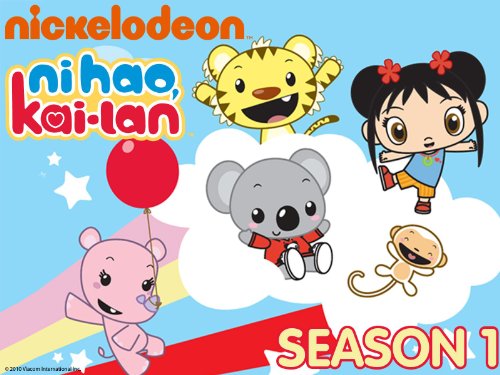
 Ni Hao Kai-lan Season 1, Ep. 10 "Happy Chinese New Year!" 

It's Chinese New Year, which means a big feast, red envelopes, and friends and family all together! Kai-lan and her friends are thrilled because this year, they are old enough to carry the huge dragon costume.
  
Ni Hao Kai-lan Season 1, Ep. 13 "Hoho's Big Flight"
Today's the big lantern festival to celebrate the end of Chinese New Year! Ye-Ye gives Kai-lan some lanterns for her and her friends to decorate.

And this one on YouTube. Taoshu Chinese New Year Special


Thumbnail

We also watched some traditional lion dances on YouTube. Just snippets so they could relate it to real life and actual people and places.

We learned to count to 10 in Mandarin using this song I created.

yī - èr - sān, sì, wǔ
This is how I count with you
 liù - qī - bā, jiǔ, shí­
This is how you count with me!

1 一 
2èr
3sān 三 
4 四 
5 五 
6liù 六 
7
8
9jiǔ
10shí­

This is a great Youtube video for pronunciation.
Thumbnail

We practiced our colors in Mandarin, especially red, hóng sè 红色, the color of luck. Here's a good Youtube video for learning the colors.


Since we learn Mandarin here, we say Gong Xi Fa Cai, rather than the more commonly used phrase in America, the Cantonese saying, Gong Hey Fat Choy.
Tags: Chinese, New, Year, Chinese New Year, holiday, preschool, daycare, child, care, kindergarten, template, gliff, printable, free, freebie, craft, painting, activity, activities, video, book, books, snake, sight words, reading, art

Thursday, February 7, 2013

Our Body - Week 1 Body Parts - Day 2 Muscles


Tuesday - Muscles
Teaching Elements for today are:
  • We each have muscles
  • Our muscles are necessary for us to move
  • Our muscles are elastic
  • Our muscles grow to help us get stronger
  • Our tongue and heart are muscles
  • We have voluntary and involuntary muscles
Beginning Discussion - Focused on the elements above and exploring our bodies to feel our muscles and moving to test out our theories.

Language - We worked on our movement sight words: play, on, see, look, run, in, up, into, ran, jump, down, went, came. We mixed them up, created commands, and acted them out.


Math - To test our strength, each child pushed down on a scale to see how much force they could apply. 


We graphed the results and discussed who had more, less and same. The child had to locate their correct number and initial on the graph. If older, they would have colored in their own bar.


 Then the children combined forces, used teamwork and saw their force doubled.


Science - We discussed how muscles are like rubber bands in that they stretch. To demonstrate, the children used their muscles to pull and release a large rubber band to see how this might work.


To check out just how stretchy a rubber band could be, we experimented. Each child chose a rubber band from our rubber band cache, held it at the end of the ruler and stretched it out.


First we sized the rubber bands to determine who would have which number on the graph, working ordinal count. We graphed the results, again with each child finding their corresponding number on the graph. We discussed the outlier of the big rubber band and how the different sizes of rubber bands compared to their stretchiness on the graph.


Fine Motor - Painting with rubber bands in a variety of ways. I gathered several rubber bands together looped a piece of tape through them and up along the end of a pencil, then secured more tape around the pencil to hold them in place. Mr. G was into the pouncing effect that looked a lot like fireworks. Miss A was into the dragging technique that produced an interesting path of lines across the paper.


Gross Motor - Using an exercise band with ankle/wrist straps that make excellent holding handles, the children learned to use their muscles to work their balance and strength against one another for some tug-o-war. It took them a few minutes to get the coordination down, learn to squat a little for balance, and to use their core muscles more than their arm strength to hold their position or pull back. First one to move forward lost and another child took a turn. They really liked this.


For a simple activity, it was enlightening how much it worked their gross motor skills.

Music/Fingerplay - I couldn't find ANY songs or finger plays for muscles, so I made up my own. You have to pause a little on the last line for THAT and MY to make it smooth.


My Muscles [Farmer in the Dell]
Original song by Little Stars Learning

My muscles help me move
I’m so glad that my muscles help me move
 

A muscle pumps my blood
I’m so glad that my heart pumps my blood

A muscle lets me talk
I’m so glad that my tongue lets me talk


Books - We read our big book Head to Toe by Eric Carle and acted out the different movements, using our muscles and discussing which ones we used for each activity. Since this is a common book for us to read, we didn't lose anything by working through the story.


Video - We used this video throughout the Our Body theme. For today, we watched the episode Flexes It's Muscles.

It was a really fun learning day. The children were very engaged and picked up many tidbits of information, even ones that I thought would be over their heads.
 Tags: science, body, my, anatomy, physiology, muscles, preschool, daycare, child, care, prek, kindergarten

Wednesday, February 6, 2013

Our Body - Week 1 Body Parts - Day 1 Skeleton

January always begins our introduction to body parts with the little ones and body parts in Spanish to the older children. In my 3-year rotating curriculum, this year it also means delving into the actual body...
  • Anatomy
  • Five Senses
  • Health and Hygiene
  • Dental Health
This first week we look inside. We begin to formulate the concept that there are processes working within us that are important and identifiable. Our daily schedule is:
  • Monday - Skeleton
  • Tuesday - Muscles
  • Wednesday - Digestive System
  • Thursday - Respiratory System
  • Friday - Circulatory System
 
Monday - Skeleton
The teaching elements for today are:
  • We each have a skeleton
  • Our skeleton is necessary to give us form
  • Our skeleton lets us move, but some moves are limited, and joints
  • Our skeleton is made of bones and cartilage, properties of each
  • These can become damaged and will repair
Beginning Discussion - Focused on the elements above and exploring our bodies to feel our bones and moving to test out our theories.

Language - Are skeletons scary? That question produced a variety of responses and I asked them each to justify their position.


Math - We counted some the number of joints in our hands and the number of bones in some pictures.


Science - We studied x-rays of our skeletons and other animals and poked and prodded our own bodies to feel what was underneath our skin. We felt up spines, collar bones, hip bones, ribs, skulls and joints.


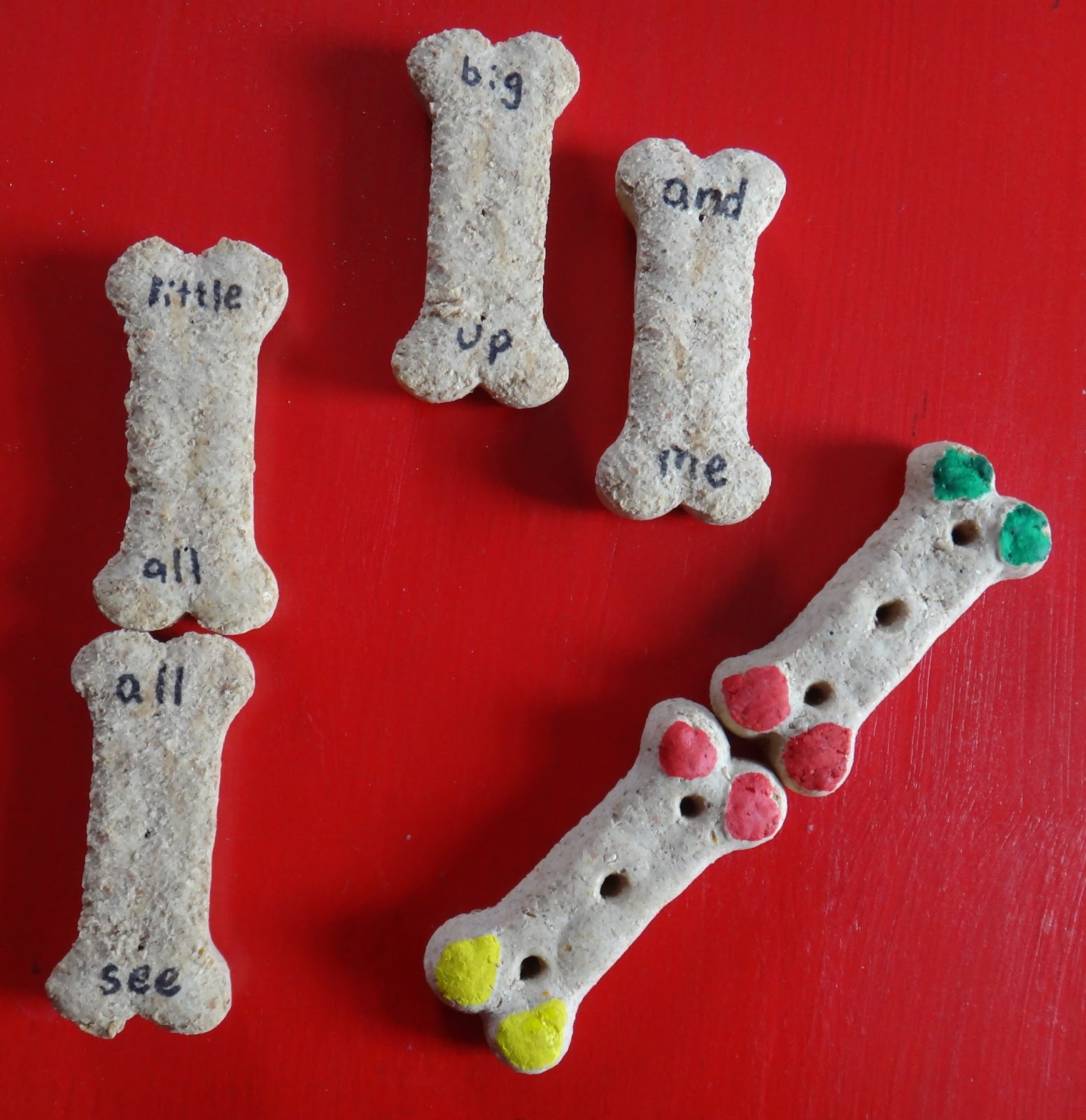
Fine Motor: Dog bones make wonderful dominoes. One side is sight words, the other is colors, differentiating for the two age groups I have going on.


`
Gross Motor: We watched The Skeleton Dance, one of our favorites, [a few times] and followed the actions.

Thumbnail

Music/Finger Play: 
Parts That Bend (tune: BINGO)
My arms have parts that bend and move
Every time I use them.
Shoulder, elbow, wrist and hand.
And this is how I move them!

My legs have parts that bend and move
Every time I use them.
Knee, ankle, heel and foot
And this is how I move them!


My trunk has parts that bend and move
Every time I use them.
Neck, back, waist and hips
And this is how I move them!


I'm made of parts that bend and move
Every time I use them.
Shoulder, elbow, wrist and hand..
Knee, ankle, heel and foot.
Neck, back, waist and hips
And this is how I move them!


Book(s): These two are a little old for them, but I own them for my son and they made great reference books. We mainly studied the visuals and read a bit of the text.

 Your Skeleton and Skin

This was our story book for the day.

Sensory: I save all of my large beef bones, boil them and clean them completely. We use these for our dinosaur digs, Halloween, and this unit. The children get out their magnifying glasses and study them and feel them.


If older, they could play with some 3 foot plastic skeletons I purchased at the dollar store during last Halloween. However, at just around 3 years old, I feel those are too flimsy to last more than 30 seconds with this group.

But I do have a large plastic skeleton that has some wear and tear and even though s/he is in parts, and missing a foot due to a long-ago pet, the pieces are sturdy and life-size and they can really get a good idea of what is going on with their skeletons.


Most items are left available throughout the unit for exploration during free time. Many of these blog pics were taken during those occasions. 

Tags: science, body, body parts, skeleton, anatomy, physiology, bones, theme, unit, preschool, childcare, child, care, daycare, prek, kindergarten

Thursday, January 31, 2013

Cylinders, The [Unexpected] Topic of the Day

Having a child-led teaching philosophy means that when a random question moves us in a new direction, we flow with it.


My facility project du jour is organizing the pantry. When I emptied a cardboard cornmeal container in the morning into one of my fancy dancy new plastic containers, I cleaned it out reasonably well and tossed it into the dramatic play area, to be played with until mutilated beyond recognition. Any viable container is initially disposed of in this manner. 


An empty cardboard container is one of those loose parts with endless play options...baby doll bed, stuff it up and carry your treasures around, something to step on and crush, put blocks inside and the lid on to make a great shaker, and of course, use it as a drum in multiple fashions by hitting the lid, or bottom, banging it with blocks or crayons or a variety of other improvised drumming accouterments.


Today, Miss H brought the cornmeal container back to me a few minutes later and said,

"Miss Connie...What shape is this?"
"That, my dear, is a cylinder."
"Oh." And she walked off, with me thinking that was the end of it.

"Miss Connie!! I want a cylinder, too!"

"Me too!"

And again, one of those cherished teaching moments blossomed from nothing into a wonderful opportunity.


Luckily, I had several containers I could manage to part with for them. So we got out the bigger ones, pawned the smaller ones off on the little kids, and I took the paper labels off so they could personalize them with coloring.

Miss A & Mr. G 32 months, Miss H 3 1/2
What can you do with a bunch of empty cardboard cylinders? Well, through the day we:
  • Colored them
  • Created a drum corps
  • Compared/contrasted
  • Sorted by size large to small and small to large
  • Counted and ordinal counted
  • Grouped by size
  • Experimented with how they could be nested
  • Stacked them as high as possible, using help as needed [before knocking them down of course!]
  • Stacked them in a graduated pyramid
  • Played store
 

These children now know, undoubtedly, what a cylinder looks like, feels like, and operates...and all we did was play. Tags: math, shapes, geometry, kindergarten, preschool, child, care, daycare, childcare, homeschool, gross motor, fine motor

Wednesday, January 23, 2013

Infant Food Introduction Check List

I've had this Food Introduction Check List on my client site for a while now, and have decided to make it public. The parents and I coordinate the food introductions to their infants in conjunction with their pediatrician's recommendations. 


I consider food introduction to be simply a muscle building exercise and learning activity for the first few weeks. It really doesn't matter what they are given when most of it will end up NOT going down. I hear a lot of talk about rice cereal being a waste because of its low nutritional value, but its good aspect is that the consistency can be easily manipulated to an infant's preference. Some like their first foods runny, some like them thick. It also takes on the flavor of whatever it is mixed with, which is usually breast milk or formula, so the infant accepts it readily as it tastes familiar. It is also cheap, so if most of it gets everywhere BUT in the stomach, it's not a big deal. 


 Eating is a learned process and
as with any learning,
takes practice!!

The tongue is the last muscle in the human body to fully develop. Sucking, eating and babbling all help to form that muscle and enable an infant to eat and speak well. Eating, however, requires a full mouth movement of the tongue, and enhances tongue muscle formation greatly. 


Avocado is the best brain food for baby, so early and often on that one. Sweet potatoes are a super food, providing a holistic punch of vitamins and minerals. These are my two favorites for starting and keeping as constants in an infant diet.


Remember that breastfed babies are used to a constantly changing taste in their milk. They usually readily accept new foods on taste, but may not on texture. Formula fed babies, however, have had absolutely no variances in taste their entire lives. They are usually less ready to try different foods and may reject them more often. Remember that tastes are LEARNED. They are all new to your infant. If s/he rejects your offering, try to get at least a taste into his/her mouth. It may take 10-12 introductions before your infant will accept a food. 


DO NOT GIVE UP!!

Remember that you didn't like coffee or alcohol the first time you tasted it, either. As I always say,


PALATES ARE CREATED, NOT BORN

Don't limit your infants taste experiences simply because they don't immediately take to a specific food. For more information on this, check out my blog post Picky Eaters Are Created


Food is THE ONLY complete 5-senses experience. Every time an infant experiences a new taste or texture, they build new brain connections. It is a wonderful, rich learning experience that you can provide.

Tags: infant, toddler, food, introduction, checklist, list, picky, eater, first, foods, solids, solid, best, baby

Thursday, January 10, 2013

Inexpensive Manipulative

Manipulatives and toys don't have to be expensive. Often, the simpler the better, and even more often, the most inexpensive items can be the ones that thoroughly enchant children and provide them with endless hours of imaginative play. 

The best example...and empty cardboard box, of any size, but especially one large enough for a child to get into.

I had noticed on Pinterest a mom took toilet paper tubes, cut them in half, and had her toddler place wiffle balls on top of them. 

So when I saw a bag of smaller wiffle balls on 70% clearance in Target's dollar section, I went ahead and grabbed them for .90. These looked to be just the right size to fit into an egg carton. 


They were. Actually, the little ones had to work at getting them in and out, and began to use some logic/reasoning skills when they realized they could dig their little finger into the holes for leverage. Excellent for teaching 1-1 correspondence even though they aren't aware that they are learning that while doing it.

But then I thought of the next older child in our group, and thought I'd do similar to an Easter activity I have where I placed colored dots in the bottom of the egg carton and the children matched the plastic eggs to the color dots. Coloring the balls was overwhelming, so I decided to just add a circle of color with my Sharpies to up the difficulty.

Then I thought of the preschoolers who are working on 11-20 at the moment, and hated to waste that 18 hole carton for them...so I added 1-18 to the balls and the carton for them to number match and work on number recognition, number order and left-right convention. When we get to number words, I'll add stickers to the bottom over the written numbers for matching.
Mr. G 33m
So this very simple, inexpensive, throw-together game, now serves every age from infant to preschooler. It has three levels of difficulty built into it. Surprisingly, even though it's been a free-choice activity for everyone for a week now, all of them are still using it regularly.

It is also serving the purpose of teaching the littlest ones not to throw inside. Because if they do throw the balls, then it gets put away.

Miss N 18m & Miss H 13m
I always open it so that the balls are on the left and the holes are on the right, even for the little ones, to reinforce the left-right convention.

I will add that I had several different types of egg cartons to choose from, and this type was the best one for being able to easily have the balls available and contained in the lid, Dutch Farms brand. Other ones had a  lot more inserts in the lid that made it inconvenient. I just turn it upside down to open and the balls are on the lid. 


For the older children, I make sure to mix the balls up well before giving to them so they aren't perfectly pre-aligned.

Tags: infant, toddler, ball, wiffle, counting, manipulative, fine, motor, color, matching, number, order, egg carton, free, inexpensive, cheap, home-made, home, made, recycle, recycling, game, learning, tool, 1-1 correspondence,