Wednesday, October 29, 2014

Preschool Owl Theme Curriculum


CURRICULUM activity pics are below

This is a one week curriculum that requires no additional components. I have file folder games and printables that we also utilize.
click to open
   
SONGS
Owl Song (I’m a Little Teapot)
I'm a great big owl, as you can see
I live high up in a tree.
All the other birds wake me up when they play,
Because I like to sleep in the day!

Time to Eat (Mary Had a Little Lamb)
Owl said, "It's time to eat, time to eat, time to eat!"
Owl said, "It's time to eat!
What do I eat tonight?"

Owl ate a mouse that night, mouse that night, mouse that night!
Owl ate a mouse that night
And said, "It tastes just right!"

Nocturnal Animals
On a moonlit night when the stars come out
There are nocturnal animals all about
1. Whoo, whoo, what do I see 
(make circles with fingers, hold up to eyes)
A wise old owl looking at me
2. Meow, meow, what do I see
A big black cat is looking at me
3. Eee, eee, eee, what do I see
A little bat just looking at me
4. Ribbit, ribbit, what do I see
A big green tree frog looking at me
5. Squeak, squeak, squeak, what do I see
A garden dormouse looking at me

Little Hoot Owl (Six Little Ducks)
Who flies around in the dark of night?
Who glides o’er silent night?
Who eats his dinner by late moonlight?
It’s a little hoot owl with his owl eyesight!
Who-who, who-who, little hoot owl.
It’s a little hoot owl with his owl eyesight.

LITTLE OWL  (Jingle Bells) Liz Ryerson
Little owl, little owl
High up in the tree.
Little owl, little owl
Blinks his eyes at me.
Hooting loud, hooting soft,
Hooting all night long.
I just love that little owl
And love his hooting song.


FINGER PLAYS & FLANNEL BOARDS
5 Little Owls By Lucia Kemp Henry
5 little owls on a dark, dark night.
5 little owls are quite a sight.
5 little owls! Are you keeping score?
1 flies away and that leaves 4.
4 little owls as happy as can be;
1 flew away and that leaves 3.
3 little owls calling, “Who, who, who”;
1 flies away and that leaves 2.
2 little owls having lots of fun;
1 flew away and that leaves 1.
1 little owl and we’re almost done;
He flies away and that leaves none.
 [Can be flannel board]

Five Hoot Owls counting flannel
Five hoot owls sitting in a tree
One flew away! How many do you see?
One, two, three, four.
Four hoot owls… etc.

A Mouse for Supper
Five little owls in the old elm tree
Fluffy and puffy as owls could be,
Blinking and winking with big round eyes
At the big round moon that hung in the skies,
As I passed beneath, I could hear one say,
“There’ll be mouse for supper, there will today.”
Then all of them hooted “Tu-whit, Tu-whoo!
Yes, mouse for supper, Hoo, hoo, Hoo hoo!”

 One Little Owl by Elizabeth Scofield
One little owl when the moon was new,
Along came another owl, and that made two.
Two little owls perched high in the tree,
Along came another owl, and that made three.
Three little owls flew to the barn door,
Along came another owl, and that made four.
Four little owls lined up side by side,
Along came another owl, and that made five.
Five little owls hooted "Whoo, whoo, whoo,"
Then they all flapped their wings and away they flew.

DRAMATIC PLAY/CREATIVE MOVEMENT
Wide Eye Owl
There's a wide eye owl
(make fingers in large circles and cup over eyes)
With a pointed nose
(use fingers to make a triangle & point out for nose)
2 pointed ears (use fingers for ears)
and claws for toes (wiggle fingers like toes)
he lives way up in the tree (point up to tree top)
and when he looks at you (point at kids)
he flaps his wings (use arms for wings, and flap)
and says whooo whooo (continue flapping wings)

The Owl [Finger play or dramatic movement]
An owl sat alone on the branch of a tree,      
(Use arm as tree branch and raise thumb for owl)
And she was as quiet as quiet could be.
'Twas night and her eyes were wide open like this;    
(Circle eyes with fingers and look around)
She looked all around, not a thing did she miss.
Some little birds perched on the branch of the tree,   
(Fingers of other hand fly onto tree branch)
And sat there as quiet as quiet could be.
The solemn old owl said "whoo-whoo-whoo,"
And up jumped the birds and away they flew. 
(Wave hand away and flutter fingers behind back)
[For dramatic movement, children will jump up and fly away]

Nocturnal/Diurnal Game
Children will be split into groups of people and owls. When the lights go on, the people dance and the owls sleep. When the lights go off, the owls fly and the people sleep.

One Night Owl – gross motor movements
(She’ll Be Coming Around the Mountain)
There was one night owl in the tree:
Hoo!  Hoo!
There was one night owl in the tree:
Hoo!  Hoo!
Oh, he called up to the sky to an owl flying by,
And the owl came and joined him happily:
Hoo!  Hoo!
[Repeat for additional numbers.]
[Can be flannel board]

Pounce on the Mouse
The “owls” are barefooted. As they fly around, a beanbag is tossed out and the “raptors” must grab it with their “talons” and take it back to their nest.

Alternate, the beanbag mice are already in the “field” and the raptors must swoop in and carry as many as possible back to their nest before they are all gone.

If coordination is an issue, then younger children can use their hands rather than their feet. Works logic/reasoning, coordination/balance, core strength, spatial relations.

CRAFTS
Journal- Have children think about and draw about  the night time outside.

Painting- Children will paint toilet paper tubes with brown paint, or a color of their choice for Cut and Paste craft.

Owl Babies – Children will rip a strip of craft paper approximately 1 ½ inch by 9 inch and paste to black construction paper. Using black makers, they will create lines and swirls on the craft paper to represent bark. Using pom poms attached to clothes pins, they will pounce white paint above the “branch” to create a large, medium and small owl shape. In the sky, they will use the same technique to pounce a yellow moon. Using Q-tips, they will dot gold paint into the background for stars. On the owls, they will attach 1” diameter white or yellow circles for the eyes, ¾” black circles for the iris, and a hole punched white dot as an accent. These elements can be pre-made or the children can trace and cut out. An orange triangle is added for the beaks.

Cut and Paste- The tops of the toilet paper tubes are pushed in on opposite sides to overlap slightly, creating raised ears. (2) 1 inch circles of white or yellow for eyes, (2) ½ inch circles of black for eyes, (1) orange or yellow triangle for beak, (10) 1 inch circles of tissue paper for belly feathers, (2) yellow or orange zig zags for feet, (2) 2 inch X 3 inch rectangles of tissue paper for wings.

Sculpture- Turkey Puppets – Children will trace and cut out their hand prints for the wings. The wings are attached just below the top portion of the bag on the back side. 1 ½ inch yellow or white circles are traced and cut for the eye, 1 inch black circles for the iris, and white hole punches for accents. Orange triangles and zig zags are cut out for the beak and feet. A cupcake liner is flattened and add to the center of the bottom of the bag for the tummy. If wanted, Paisley figures can be added to the top as feather tufts for a Great Horned or Long Eared owl.


Cooking- Children will create a sandwich and cut the sides off as triangles, spreading the long ends out to form wings. 1 inch cheese rounds can be added as eyes, beak and feet. To the center of the cheese eyes, an olive circle, jam, ketchup, etc. can be added as an iris
.
ACTIVITIES
Measuring Owls-North America
Elf Owl 5 inches
Northern Pigmy Owl 7 inches
Northern Saw Whet Owl 8 inches
Western Screech Owl 9 inches
Burrowing Owl 10 inches
Barn Owl 12 inches
Long Eared Owl 14 inches
Great Horned Owl 20 inches
Snowy Owl 26 inches
Great Gray Owl 33 inches

How much light do we need to see? Place children in a dark place, either a room or a dark tent. If possible, have a dimming light that you can adjust, or open the door or entryway a little at a time. Have the children try to be the first to identify items that you brought in as the light gradually increases.

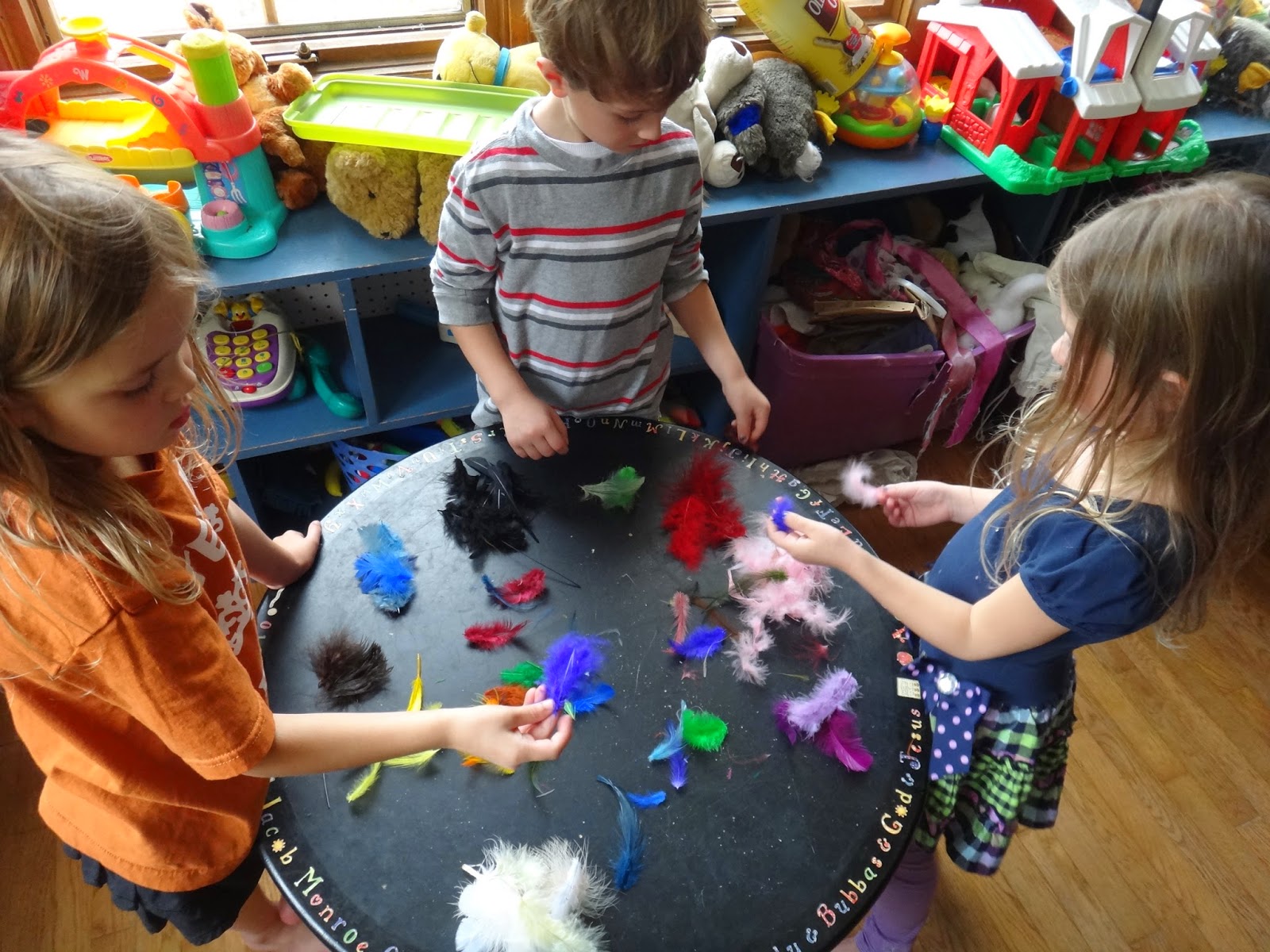
Counting Feathers – The children will grab up a handful of feathers and count them.

Sorting Feathers – The children will work in teams of 2-3 to work out a method of sorting the feathers by color, type, or size, then count each group

SUPPLIES (Unusual)
Feathers

VIDEO
Youtube – Learn All About Birds https://www.youtube.com/watch?v=rariptboC14

NETFLIX – Wild Kratts, “Raptor Roundup”
Season1 Episode 40

Youtube – Owl Babies Animation https://www.youtube.com/watch?v=e6aYYiyQUmY

Older children – Movie - Legend of the Guardians PG


WEBSITES
Little Night Owl poster – The Very Busy Kindergarten


LEARNING OBJECTIVES
  • Know what a carnivore eats
  • Know what nocturnal means
  • Describe 3 characteristics of an owl
  • Describe 3 characteristics of a raptor
  • Know 3 other raptors
  • Know at least 3 species of owl
OTHER
If possible, visit an owl or raptor exhibit at your local zoo, or invite a local wildlife rehabilitation group to bring an owl for a visit.

Owl Poem
Northern Saw-whet Owl 1-60 dtd
Finish the picture owl
Coloring Page - Labeled Owl from Kidssoup
Owl Facts - San Diego Zoo
Owl Alphabet Cards
Owl Pic Pinterest Board
Virtual Owl Pellet Dissection
Owl On-line Jigsaw Puzzle
Owl On-line Jigsaw Puzzle2
Owl On-line Jigsaw Puzzles3
O is for Owl Tracer Printable
Owl Mobile Printable & Coloring Page
PBS Cat in the Hat - Nocturnal Animals
Nocturnal Animals On-line Seek and Find Game

FLANNEL BOARD

TP OWL

OWL BABIES & COUNT THE STARS


 OWL PUPPETS


POUNCE ON THE MOUSE & GRAPHING


MEASURING OWLS

NOCTURNAL/DIURNAL

FEATHER COUNTING/SORTING
Follow Connie -'s board Owls Theme on Pinterest. Tags: homeschool, homeschooling, pre-k, preschool, teaching, kindergarten, early elementary, elementary, science, biology, gifted, advanced, learning, learners, interactive, Reggio

Sunday, October 26, 2014

Little Mouse Felt/Flannel Board

This is a common felt/flannel board, for a reason. From the youngest toddler to my elementary age graduates that return occasionally, all the children love it and can do it forEVER... They would do it every day if I'd let them.


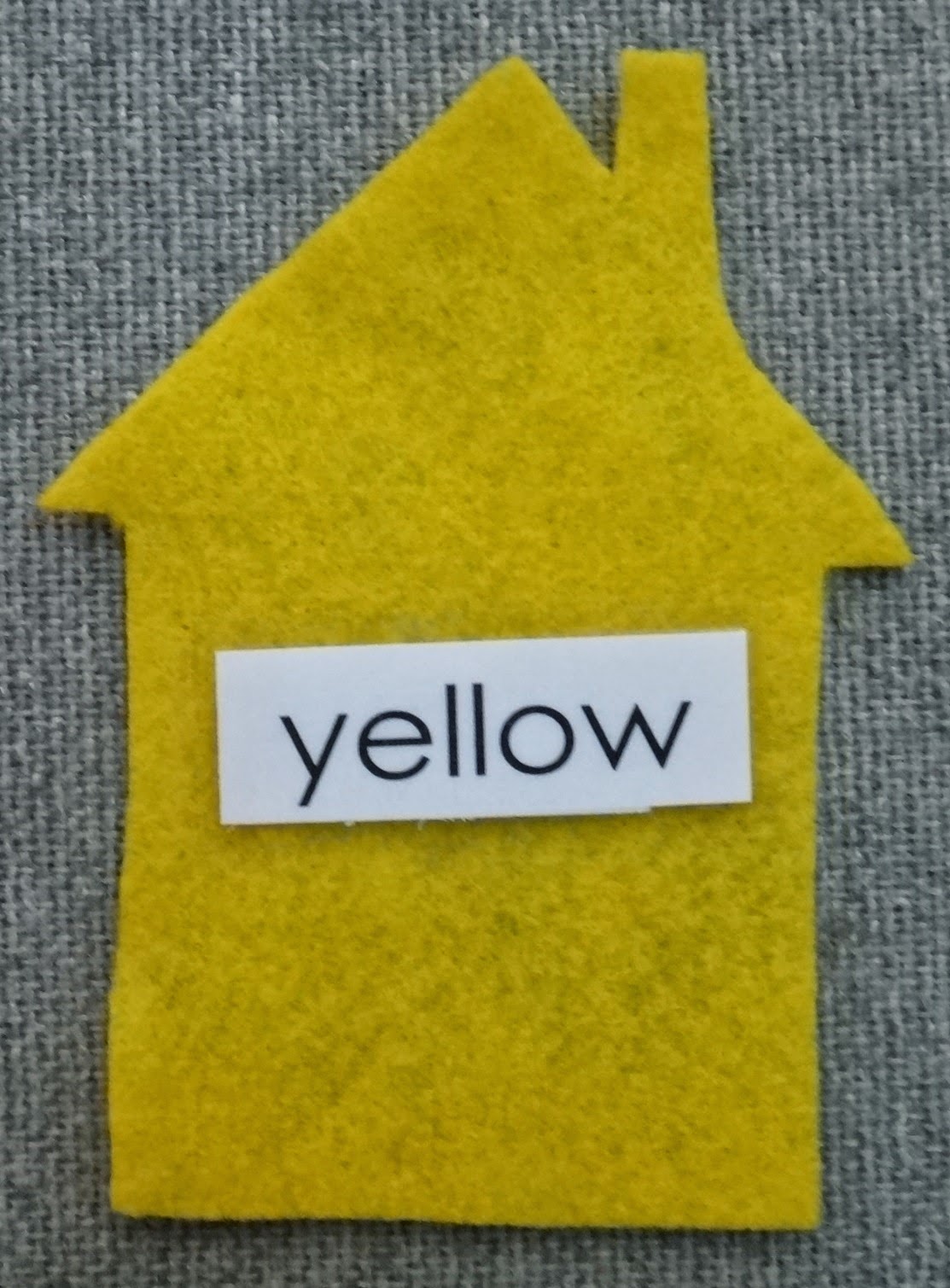
"Little mouse, little mouse
are you behind the [color] house?"


Since I teach 12 colors, we use all of them when we do this as a large group activity. The children take turns choosing a color house for us to check behind. The toddlers can choose any color, but the preschoolers can't choose a color that has already been chosen by someone else. This works memory, observation, and pushes them to try to identify colors they may not be comfortable identifying. If they truly don't know the color word, they can point to it and their friends can help.

If I am wanting to work specific colors with a certain child or children, then I'll pare it down to as far as just 2 relevant ones. 

PATTERN:

I used markers to add the features coloring and a small google eye.


You'd think that they could tell which one the mouse is behind. It's bulky enough for an adult to figure out, maybe, but the children don't. When they hit on the one with the mouse and it's revealed, you'd think it was Christmas they way they are overjoyed and excited. No matter what their age! 


Since the children choose colors they know, I can assess color knowledge through this activity. Though they usually choose colors they know well, by doing this as a group activity, they are able to see, hear and learn the other colors through the choices of their friends and will often expand their choices as we go through the 2nd and 3rd rounds of play. 

I will also use this as a prediction activity and occasionally ask everyone to raise their hands who think it is and is not behind that color. 

If I see that a particular color is not being picked, I'll step in and ask if anyone know what that color is, and if there is no response, I'll provide the color word and they'll repeat it a couple times before we return to the activity.

The children also have the option of doing flannel boards as an independent activity. For the younger ones, they can color match. With our color match cards.


The older ones can use our color word, number, or ordinal cards.


ADVANCED ACTIVITIES:
Color Beginning Sounds: The children choose a color by saying, "The color that begins with a G!" I'll respond to the group, "What color starts with the letter G?" and the group will respond. It gets interesting with P for purple and pink, but that's a learning experience. Depending on the silliness we get and if necessary, I'll eventually ask the child back, "Is the ENDING sound [phonetic pronunciation] L or K?"

Color Spelling: It can be used as a color spelling activity, as they have to spell out the color they choose. I can differentiate within the group activity with having the toddlers pointing, the preschoolers saying the color word, and the pre-ks spelling. If I'm wanting to work on spelling color words, then I'll just work with the pre-ks as a small group activity. There is a color word wall behind them, and if they get stuck, they can turn around for a look. Resource utilization is a big thing here. 

Positional Statements: The child has to give a positional description rather than a color description. For instance, ABOVE the purple house. To the right of the orange, to the left of the tan, below the black, 2 left from the red, above and to the left of the black... They usually try to outdo one another on the complexity of position, and it becomes a logic and reasoning game for everyone. 

Alphabetize: The child does the color word match, then places the colors in alphabetical order on the flannel board. This is an individual or pair activity.

If you have the time and want to get fancier, here's a darling version from Storytime Kate. Since I use this flannel board to teach colors to very young children, I didn't want the colors to be confused by too much other-color detail. For older children, these houses would lend themselves to additional levels of play.


Tags: flannel, felt, board, preschool, homeschooling, gifted, advanced, toddler, color, colors, recognition, fine motor, logic, reasoning, matching, spelling, words, center, center time,  

Tuesday, September 23, 2014

FREEBIE - Left Right Arrows Worksheet


I'm not a fan of worksheets. Developmentally Appropriate Practice [DAP] is to not use worksheets until after age 8. Learning for the younger set needs to be hands-on and interactive for maximum retention and engagement. We have only begun to use worksheets for writing, which is necessary at this point for these children. 

However, there's always that certain child, whose learning style just begs for worksheets...Mr. G just can't get enough of them, and that's okay, as long as it's his choice. This is the same child that couldn't be bothered with any type of coloring, drawing or writing just a few months ago, and now wants to do it all day every day.


Photo: I'm not a fan of worksheets. Developmentally Appropriate Practice [DAP] is to not use worksheets until after age 8. Learning for the younger set needs to be hands-on and interactive for maximum retention and engagement. We have only begun to use worksheets for writing, which is necessary at this point for these children. However, there's always that certain child, whose learning style just begs for worksheets...Mr. G just can't get enough of them, and that's okay, as long as it's his choice. This is the same child that couldn't be bothered with any type of coloring, drawing or writing just a few months ago, and now wants to do it all day every day.

Keeping with our green = go, red = stop, left/right convention we are working on in pre-k, I made this worksheet to challenge them to be observant, work on their fine motor/writing skills and strength, and to work their left and right concept understanding. 


Little miss smarty pants Miss A went through and quickly marked all of her arrows, then went back and colored them. One of the things I was looking for them to do.

They are doing the first worksheet today which has a bit of a cheat in that the left and right are listed to either side. 


They will be doing the second worksheet from now on, which has no indicator as to the correct direction. 
Tags: left, right, convention, worksheet, free, freebie, preschool, pre-k, kindergarten, fine motor, drawing, coloring, page, colors, directions, directional, arrow, math, geometry, homeschool, homeschooling

Monday, September 22, 2014

Flu Rules

These are my FLU RULES I send out to my clients every year once the flu has become pervasive in the community. Some may seem common sense, but as we all know, common sense isn't so common... 


I'm not one for keeping a child's environment too sterile. It breeds resistant bacteria and lowers a child's immune system. However, 

FLU KILLS CHILDREN. 
RSV KILLS BABIES and TODDLERS.

This is the one time of the year, if either becomes a problem within the community, when precautions are truly necessary.


#1 No touching your face or picking your nose without first washing your hands. Adults touch their face an average of 18 times an hour (Today Show) and children do it excessively more than that. This is the number one way that anyone will contract a contagion. Children will still do it, but you can help make it a more conscious act for them. If they KNOW or notice when they do it, they at least will have the choice to stop and wash their hands first or use something other than their hands, such as pulling their sleeve over their hand and rubbing with the top of that (most likely not contaminated by others) instead.

#2 Keep yourself to yourself . An adult’s cell phone is the most bacteria laced item in their world. Seconded, by the pump on or bottle body of hand sanitizer, keyboards and shopping cart handles. Keep these items surface sanitized. Don’t share pens and pencils. Use your own and keep them sanitized from surface contamination. If you lay one on the counter at the bank or the conference table at work, you can bet it is then contaminated with something. 

School age kids should beware of desk surfaces if they change classes or use communal work surfaces and keyboards. They should not share scissors or writing utensils. Little kids should be kept from wrestling with other kids and putting things in their mouth. Kiss your kids on the head, not the mouth or face, and try not to breathe on them.

Ten day incubation period can hit you quick and you could spread something without even knowing it!
Cough and sneeze into your elbow, teach your children the same!!!!! Using your hands actually spreads it more, especially with children.
#3 Create a bubble as much as you can. Our contamination world includes our family members (and their world) and home, our co-workers (and their world) and offices, the stores we visit and the public (and their world). Even if your child stays home, all of this can be brought to them. If your child goes to school, they are exposed to every other child’s world in an exponential manner. 

The health department in my state only recognizes 2 forms of surface disinfectant. Bleach solution and Clorox Wipes. Ask your child’s teacher to disinfect surfaces between classes. If your child attends something like ballet, where the children are all sharing a barr surface, ask the instructor to disinfect it and have all children wash their hands thoroughly before beginning classes. 


At home, keep door handles, faucets and work surfaces sterilized. If your child develops symptoms, wash toys in a bleach solution or washer. Keep anyone who shows the slightest symptoms segregated from everyone else. 

Use hand sanitizer before entering your car EVERY TIME to create a barrier between home and public places, before entering your child’s school or daycare, touching your child, and wash everyone’s hands thoroughly every time you get home. If your child goes to an older school that doesn’t have hands-free technology, teach them to use their elbow or a towel to flush toilets, turn off faucets, etc.
If a child is:
  • vomiting, 
  • has diarrhea 
  • has a temperature of over 100 degrees
s/he need to be kept home until symptom free for 24 hours WITHOUT THE AID OF ANY MEDICATION! 
Sending anyone sick out into the public is irresponsible. Sending a sick child to a home daycare can infect an entire family over the course of up to a month. Keeping your child home from care while they are sick, helps ensure your provider will not have to potentially shut down due to the illness of their family, which could interrupt care for a great deal longer than keeping your child home!

Centers as well must maintain a specific child/caregiver ratio, and infecting the staff can cause service disruptions as well.

Sick children need to be comfortably at home with 1-on-1 care from their parent. If you don't think you can afford time off of work, neither can your child's friends' parents.

#4 Create a bubble 2… KEEP YOUR KIDS HOME!!!  

Yes they have to go to school (unfortunately – as of writing this, 150 kids are currently out of our local elementary school with flu symptoms). That’s it. If you have to go anywhere public, try to keep your kids at home with someone else while you go to the grocery store, Target, etc. ESPECIALLY places like Walgreens, WalMart or anywhere with a pharmacy. SICK PEOPLE PURPOSEFULLY GO THERE. 

Beware ball pits, public play areas, arcades, etc. I saw a WalMart picture that had a baby carrier in a cart with a note on it that said, "DO NOT TOUCH BABY." This is actually a good idea. They also shouldn't breathe on it. Remember that people are coughing into their elbows! How do people hold babies? In the crook of their elbows! NO!!! Before anyone holds a baby, they need to have a blanket or other barrier between them and the baby's head.

 Remember also that hand sanitizer can harm young children and infants, this needs to be washed off before letting any baby gnaw on your finger (not that this is a good idea anyway). Always keep hand sanitizer out of children's reach.

#5 Daycare Centers/Homes. Bedding should be kept separated. 

Hand washing should be constant and for 20 seconds (Twinkle Twinkle Little Star, Birthday Song, ABC Song) with warm water and soap over all surfaces and between fingers. Disinfection should be excessive if flu is present in the children's extended environment, such as at a parent's office or sibling's school. Children should be discouraged from touching each other and touching their faces. 

Parents, ASK about policies and procedures that may affect your child. Toddlers should be segregated from babies and older children due to their excessive sharing and mouthing of toys. They are the ones most likely to get sick and pass it on. If you are not comfortable with your center’s efforts, ask if you can bring sanitized toys and bedding from home. Children should be required to wash their hands immediately upon arrival. Parents should not be allowed in the children areas without sanitizing or washing hands.
FLU INFO

Every year in the United States, on average: http://www.cdc.gov/flu/keyfacts.htm

5% to 20% of the population gets the flu; more than 200,000 people are hospitalized from flu-related complications; and about 36,000 people die from flu-related causes.

Some people, such as older people, young children, pregnant women and people with certain health conditions (such as asthma, diabetes, or heart disease), are at increased risk for serious complications from seasonal flu illness.


How Flu Spreads: http://www.cdc.gov/flu/keyfacts.htm


Flu viruses are thought to spread mainly from person to person through coughing or sneezing of people with influenza. Sometimes people may become infected by touching something with flu viruses on it and then touching their mouth or nose. Most healthy adults may be able to infect others beginning 1 day before symptoms develop and up to 5-7 days after becoming sick. That means that you may be able to pass on the flu to someone else before you know you are sick, as well as while you are sick.


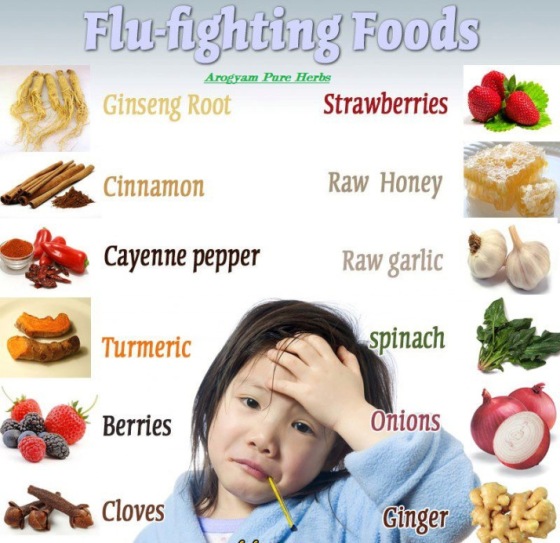
flu-fighting-food-and-herbs


Sure you may have an AWESOME immune system, but even if your body is capable of fighting off infection, you can spread the virus from one surface to another. Be aware, be thoughtful, be considerate of the children, elderly and immune compromised in our society who you can help to protect from prevalent illnesses that may cause them harm.
Tags: illness, flu, child care, child, care, daycare, center, sickness, season, rules, information, preschool, prevention, wellness, infant, toddler, children,

Monday, September 8, 2014

Learning Through Play - Purposeful Blocks


Purposeful Blocks is on our agenda as a toddler/early preschool activity on Fridays. Here are 4 activities that we do.


I invite the children to join me, either vocally, or simply by starting to do something they can mimic. 

These activities work upon:
  • Fine motor skills
  • Gross motor skills
  • Physics
  • Logic/reasoning/problem solving
  • Counting, colors, letter recognition, 1-1 correspondence, analysis
TALL TOWER

Here, the are doing simple stacking. 

Mentally, I am assessing their dexterity, thought processes and movement, and how they handle any frustration. 


During the second round, once the initial block tower falls over, I then ask them if they can tell me a letter or color on the blocks as they place them. If they tell me wrong, I simply say the correct one and have them repeat it.


This round, I look for increased skill in stacking.

If they choose to do a third round, then I ask them to count the blocks as they place them. Since they usually do it highest during this round.

They usually want to do more, but I stop here and give another child a turn. It is always best to keep them wanting more. They know they can come back and do it on their own at any time.

I CAN DO IT, CAN YOU DO IT

This activity has me on one side with a set of blocks, and the child on the other with an identical set of blocks.

I show the child the block, they find it.

I place it down, they mimic my placement.


It may seem simple, but it is not. 


I don't give verbal instructions, so I am looking to see if the child identifies the correct block and chooses it, and if the placement is a mirror of mine, inverted, etc. to see how their mind is working.


For instance the child above, chose to flip the side the secondary tower is on, but mirror the main structure.

The pre-k's like to do this on their own as an activity with a friend, taking turns as the main and secondary builders.


HOW MANY IS IT?


For this game, we simply take as many of the big blocks out as we can find, throw them all on the table, and each child grabs free-for-all as many as they can until all blocks are claimed.

Once they have them, they take turns counting how many they have. For the younger ones, like this 2yo, it is often easier for them to place them linearly. I only help if they need it. I am looking to see how THEY choose to place them for counting, and how they do it. 

Do they line them up, count them in a random placement, or count as they move them from one set into another set?


COLOR SORT & GRAPHING
The blocks are all tossed on the side of the table, and the children sort them into columns by color. Often the hardest part is the column part, since usually we sort into groups. Each block has 2 colors. 

I'm assessing their fine motor skills, placement choice, color choice, how they work around one another to get to more blocks, if they gather some up and take them to the other side, and if they correct another's work.


I hear a lot of, "Can you pass me a block, please?" which makes me very happy.


Once sorted, we count the groups, count them all, then do analysis:

  • Which color has the most/least?
  • How many more does purple have than yellow?
  • Does red have the same amount as green?
  • How many is purple and orange added together?
None of these activities takes more than 10 minutes total, and that's only when they have to take turns. Often I'll see them self-select the activities later in the day or week.
Tags: learning, play, through, math, counting, colors, fine motor, toddler, preschool, activity, hands-on, child care, daycare, homeschool, homeschooling