Tuesday, September 11, 2012

Apples Theme with FREEBIES

As I checked the pears hanging heavy on our trees this morning for ripeness, and the children were running around with their jackets on, it really hit me that fall is upon us!


$1 for set

Since my apples file folder games (above) have been selling so well, I went ahead and compiled the rest of my Apples Printables for Preschool (sampling below) and put it up on TPT today. 
$4.25  This 67 page packet includes 52 pages of printables including: addition/subtraction counting mat with manipulatives, calendar/number line cards, 6 board bingo with calling cards that can be used for patterning or games, Pick a Dozen Apples game, mini book working 1-10/number words/colors/color words, Build an Apple Tree dice game, apple dot-to-dots: number/lower case/upper case, 2 graphs for apple foods and drinks, lacing, spiral maze, 2 apple rulers, patterning file folder game or card strips, apple craft pattern with 2 stem options, Parts of an Apple poster, 2 pre-writing worksheets, 2 tangram boards, 2 word and 1 number puzzles, shadow matching, sizing, word build, word search, word wall, sentence wall, fuse bead craft pattern, bookmarks, abc worksheet. Additional pages include instructions/ suggestions and teaching resources.

Free previews are available for you to check out before you buy, and I always guarantee your satisfaction. Remember that all the graphics are created by me, so everything is fully customizable.

As always, I have a freebie thrown out there on TPT. This time it is the pre-writing apple tree worksheet.

However, for my loyal blog followers, I add the following poster:

It will show up on Scribd as a PRIVATE DOCUMENT, but you can print it out with no issue. I'm giving you permission via linking through here. However, if you do have any issues, please let me know ASAP! Thanks. 

This is only available for printing and only free through this link. 

Here are some of the books I recommend for this theme.  


I'm really looking forward to getting started on this theme with this new batch of kiddos. It's a wonderful one for these younger preschoolers. 

Check out my post on all the teaching resources I use with this theme, songs, fingerplays, etc. and our cute arm print painting apple tree craft.
tags: apple, theme, unit, preschool, daycare, childcare, child, care, fall, autumn, season, printable, worksheet, free, writing, spelling, language, fine, motor, poster, counting, alphabet, letters, numbers, games, file, folder, craft, kid, kids

Arm Print Apple Trees

"The sun did not shine.
It was too wet to play.
So we sat in the house
All that cold, cold, wet day." - Cat in the Hat by Dr. Suess


SO...we had time to do this classic! 


  • Have child sign and date their paper (easier to do first)
  • Mix brown paint (if you don't have it, I don't):                                                                                 1/3 yellow to 2/3 red to dab of blue
  • Palate green paint and red paint
  • Have child paint their forearm brown and hand green

  • Stamp onto appropriate sized paper
  • Have child paint their other hand green and stamp in the white parts to fill in
  • Have child do finger print stamps of red and/or yellow for apples
 

SKILLS
Art: creative expression, painting
Social: following directions

Science: apples grow on trees
Math: counting apples on the tree, measuring arm length

Check out the other apple theme posts...Apples Theme - Fun Stuff with songs, fingerplays, etc. and Apples Theme with FREEBIES: a pre-writing worksheet and apple anatomy poster to print.
tags: arm, apple, painting, craft, art, stamp, stamping, child, tree, finger, daycare, child, care, childcare, preschool, kindergarten, kid, kids


Thursday, September 6, 2012

Knowledge, It's In a Child's Eyes

In teaching young children for so many years, I have learned in order to be an effective teacher, you have to look them in the eyes. In their eyes, you can easily see what is in their mind and in their heart. 


When I give an instruction or lesson, I look for three levels in their understanding.

Blank Stare/Confusion
Either of these indicates that the child is: 

  • developmentally incapable of the action requested
  • needs clarification or a visual representation
  • is tired and unable to focus
Understanding and Acceptance
These two together indicate that the child is:


  • developmentally on task
  • is compliant with the request or comfortable with the skill requested
  • does not find the task particularly challenging, insightful or entertaining
  • is alert, focused, and content

Understanding and Calculation
These two together indicate the the child is:

  • developmentally at or above the task
  • finds the task challenging or stimulating in some manner
  • has had their interest or ire piqued to some degree
  • is rapidly mentally calculating all aspects of the task
  • is weighing the advantages and disadvantages of compliance if it is a request or command
  • is comparing and contrasting the task to others of a similar nature they have previously encountered
  • is assimilating the current information into a broader context
While understanding and acceptance are the most easy situations, those are NOT TEACHING MOMENTS. 

If a child is just so-so about a task, showing understanding and acceptance, then there is no challenge to the child. It's busy work. Babysitting.

If a child has little to no understanding of a task, then that reflects on the teacher's ability to properly present information according to individual needs and properly evaluate skill sets. 

Or, the skill being presented is at the outermost reaches of the child's current ability. Such as with counting, the child may count as far as they have down pat, but when you ask them for the next number, they get blank and confused. That is an indication simply of a current limit to teach beyond. They are not physically or mentally developmentally incapable of the task, but learning-wise developmentally incapable.

However, when presented often enough with that next number, they will get to the understanding and calculation phase. They will be able to put the new number into context, assimilate it into their counting repertoire and continue on. 

I feel that this is one of the key elements missing in today's educational environment. Teachers speak with their backs to the class writing on white boards, send students off to do "centers" on their own, and spend far too much time doing whole-class instruction. 

There is too much Understanding and Compliance expected from children and frustration or irritation on the part of teachers when presented with confusion, calculation and challenge. 

However, when you see these in a child's eyes, you KNOW that you are a TEACHER, and that it's time to get busy.

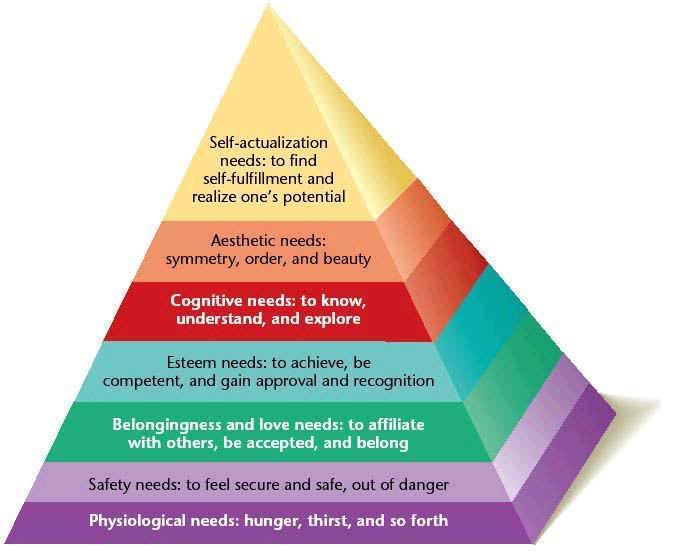
The other area I look for in their eyes, is their heart. I child can't learn if they can't focus, and it takes a confident and content child to focus on learning. Maslow's hierarchy of needs.

Ashamed and/or Fearful
This tells me the child:
  • feels as if they SHOULD know how to do something they DO NOT
  • is berated somewhere, somehow for perceived deficiency
  • has low self-esteem and needs successes
  • the child has had a developmental paradigm shift and their world just got bigger and a little scary
  • is experiencing separation anxiety
Confident and Content
This tells me the child:
  • is good with life, good with what they are doing  and has few to no issues and is ready for anything and everything
Confident and Not Content
  • the child is bored
  • the child has some emotional issue going on
  • the child has some physical issue going on - tired, hungry, hurting, etc.
  • has changes at home in routine of some kind
  • is needing attention in some way from some one
Many times it is the confident and content children who act out and let their needs be known. They are the children with enough self-esteem and confidence in the world that they believe that if their needs are known, they will be fulfilled. It is the others, the ashamed, fearful and the confident but not content that often bottle things up inside. 

It is through their eyes that you can find these needs, these needs that keep them from learning, keep them from their potential. Unless a need is identified, it can not be met. Until it is met, it is a detriment to a child's well-being, either emotionally or physically, and their learning ability.

Lives are so busy these days. Teachers are overwhelmed with too many students and parents are often just treading water trying to keep afloat with all they need to get done. Children are commended for "good" behavior and compliance. But good and compliant doesn't create the next innovators, the next challengers, the next generation of entrepreneurs, the greatest of our society. It doesn't create passionate people with a true love of what they do. 

Get on the child's level, look them in the eyes, look into their heart and mind, and respond accordingly. They are a whole person, not a reflection of the adult they will become. They deserve our respect and consideration for who they are, how they feel, their wants, needs, and desires. It is our responsibility to inspire, encourage, and challenge children to learn. Not babysit them. 
Tags: parenting, teaching, childcare, child, care, daycare, preschool, pre-k, maslow's hierarchy of needs, maslow, children, toddler, instruction, curriculum, education, educational, reform, elementary, classroom
Wednesday, August 29, 2012

Block Play, Learning Socialization and Self Control

It is always interesting during block play to see the different directions the children take. H was very focused on stacking blocks horizontally, and repeated this large stack several times.


While this time, G, who just turned 2, was extremely focused on vertical stacking of the small cylinders and rectangular prisms. He did this over and over again, consistently hitting the 5-high stack.


Usually the block area is a safe zone where children can build their masterpieces undisturbed.

I had the little ones out and about during this group session. It's good for the children to realize that they CAN re-do something if it gets knocked down and how to handle the disappointment and frustration in a controlled environment with the expectation that that will occur.


The 11-year-old joined us, and it was a good lesson for him, 
as well.


 The activity was also geared to the little ones' social skills that we don't knock down other people's creations, but we can build our own and knock them down all we want.

SKILLS
Social: tolerance, acceptance, fortitude, self-control, resiliency
Math: logic/reasoning, counting
Science: balance, physics, symmetry, architecture
Fine motor: placing blocks
Gross motor: placing blocks
Tags: blocks, play, social, development, toddlers, preschool, daycare, child, care, center, area

Seahorse Paper Plate Craft w/template


I couldn't find a good seahorse template for this craft, so I made one. It works on a normal size paper plate. I printed it out on cardstock for them to trace around.  Be warned, it isn't easy getting it to form to the contours of the plate, so this is one you'll have to help even older preschools with holding to trace.

The line is also fairly difficult to cut, so we used teacher-assist scissors.


The children chose the color of paint and painted both sides on consecutive days. On the afternoon of the second day, we embellished. It was one of the children's ideas to do the glitter on the tails. I offered sequins for the body, but they wanted to do finger painting instead.


Really, the opportunities for embellishment are endless and completely open to whatever resources you have on hand and the artistic direction of your students/child. 


These looked really cute hanging up.

SKILLS

Art: artistic expression, painting, cut, paste, multi media, 3D art
Science: discussion of why the seahorse tail is curled
Fine Motor: trace, cutting curves, paste, paint, placing embellishments
Tags: ocean, sea, theme, unit, preschool, daycare, child, care, art, craft, seahorse, paper, plate, trace, cut, glue, paste, paint, sequins, glitter, finger, template, printable, free, kid, kids

Sharing - Don't Drive My Corvette

A mother and I discussed sharing this morning. She said that she told her son to share his toy and after he handed it over to the other child, he cried uncontrollably. 

I said, if you had a brand new Corvette and someone told you that you had to "share" it with the person next to you, how would you feel? "Hell no!" comes to mind. And if someone took off in it? Yeah, you'd cry uncontrollably as well.


A toy in a child's hand is his brand new Corvette. He worked hard to get it, is working hard to keep it, and loves it at that moment. He shouldn't have to share it. That toy in the corner? Well, that's more like an old garden tool in the back of his shed. Yeah, it's his, but he really doesn't care, and if he does, then he shouldn't and he should be willing to share it. But that one in his hand? Yeah, that's his Corvette. We don't share our Corvette.


I DO allow toys from home. Toys from home DO NOT HAVE TO BE SHARED. Period. Personal possessions need to respected by the child and put away into a secure spot when not in use. Personal possession needs to be respected by the other children. It is a huge learning opportunity. " We don't want children growing into thiefs, and teaching respect for the boundaries of another's possession is vital to a child's understanding of societal and legal rules regarding ownership. This is true at home as well. Prized possessions should be put away when other children are invited to come over to play and anything given as a gift or bought with the own child's money should be off limits to other children and siblings.

We often have expectations of children sometimes 

that WE can't meet on a good day.

Milton from Office Space LOVES his stapler. No sharing.

I use these definitions of "share" for this discussion from thefreedictionary.com:

2. To allow someone to use or enjoy something that one possesses: Being in daycare taught the child to share. 

(laughing that THIS was the example)

3. To use or enjoy something jointly or in turns: There is only one computer, so we will have to share.


Do we ever really SHARE? Really? In the altruistic sense of the word? I don't think so. We negotiate. We give in order to get: friendship, acceptance, reciprocated giving, a future gain, a feeling of righteousness, etc. Older children and adults see the VALUE in sharing, the benefit to this choice of behavior. 

Young children see it only as something they ought to do, are expected to do, or made to do. This leads to frustration and anger. Tantrums. We wonder why.

?

No human behavior is performed without some concept of benefit. Yet we have this expectation in young children. Sharing will naturally occur as children mature and gain the understanding of the benefits of sharing with others. As in, "There is only one computer, so we will have to share," which is for mutual benefit. If I don't share, I may not get to use it at all.

Forcing "sharing" is unnecessary. I'm sure many of you reading this are aghast. However, no child should have to give up a toy they have in their possession through legitimate gain, i.e. not taking from another child or inappropriate source. 


"...we think we’re teaching our kids to share, or at least to take turns, but when we force our child to give a coveted object to another child – or worse yet, wrest it from his grasp – we’re teaching our child that he really isn’t safe in this situation, because someone may grab his toy away at any time – even his usually trustworthy mommy! He may well adopt this aggressive behavior towards others, but at the very least he will find it more difficult to feel generous about sharing." - Aha Parenting
However, RULES, which children have little issue with if applied consistently and fairly, should dictate appropriate turn-taking time lines (timer set if another child wants a turn), and rules of behavior, such as if you put it down or leave the area, then another child may utilize the toy or space and the first child must wait his/her turn. These do not apply to the child's personal possessions. In a sibling situation there needs to be "family" toys and the child's personal possessions and a clear distinction made between them. Family toys need turn taking and appropriate sharing. 


I purposefully place my preschoolers into situations with limited resources or role play scenarios that facilitate sharing and sharing lessons in a supervised setting. This enables me to point out the benefits of such behavior and give the children realistic time frames they can understand, such as, "Let me push A three more times and then you can have your turn." Note that I don't say, "A turn," I said, "YOUR turn," as in, it is a right. Such a simple context change, but it makes it much more personal and valid to the child.

Children are caring and social. What we usually term "sharing" is often normal social interaction of companion play. A child asks for a turn, another child gives it and vice versa. It doesn't have to be forced. If a child must be FORCED to share, then the boundaries are crossed, the child has a far greater emotional stake in the object or activity, and SHOULD NOT HAVE TO SHARE.
Tags: child, development, sharing, preschool, toddler, daycare, care, emotion, tantrum, parenting, discipline

Friday, August 24, 2012

Transportation Theme Pre-writing Freebies


As we begin our TRANSPORTATION theme this week, beginning with TRAINS, the preschoolers have completed their train pre-writing worksheets during free-choice play. 

While I'm not a big fan of "worksheets," they love these pre-writing activities which are basically just coloring sheets on which I encourage them to try to trace on the line and color within the lines. Those that can, will usually choose to work on that skill. Those that can't, at least begin to understand the concept and can chew on it until they are ready and willing to execute it. 

Set of four, train, boat, airplane, and car. I will have additional freebies over the next three weeks of this theme.
Tags: art, writing, child, Transportation, care, Car, Theme, kindergarten, Airplane, boat, preschool, Train, daycare, worksheet, coloring, unit, childcare, coloring book, prewriting, fine motor, printable, free, kid, kids